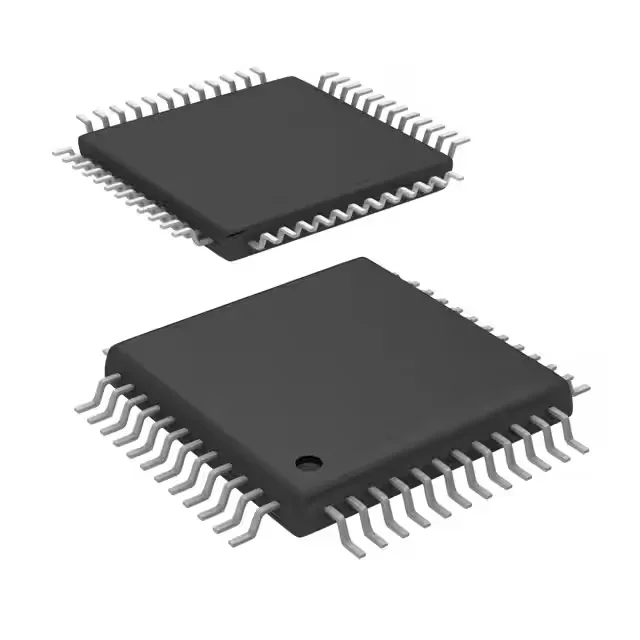
Dual stereo codec for voice-band processing
The TLV320AIC20KIPFB is a voice-band codec from Texas Instruments that packs two ADCs and two DACs with 16-bit resolution into a 48-TQFP package. It uses a Sigma Delta architecture, which means the analog-to-digital and digital-to-analog conversion happens at a high oversampling rate, pushing quantization noise out of the voice band so the in-band SNR stays clean. The serial data interface keeps the pin count manageable on a 48-pin TQFP.
SNR and dynamic range — what 84/92 dB means for your signal chain
The ADC path delivers 84 dB SNR typical, while the DAC path hits 92 dB. That 8 dB gap is common in codecs designed for voice — the capture side has more headroom challenges from the analog front end, and the playback side can be optimized for a quieter output. Dynamic range tracks close: 87 dB on the ADC, 92 dB on the DAC. For a voice-band application (300 Hz to 3.4 kHz), these numbers mean the noise floor sits well below the signal, so you are not fighting hiss on the receive path or losing quiet syllables on the transmit side. The Sigma Delta modulator handles the heavy lifting on noise shaping.
Supply rails — separate analog and digital domains
That split lets you run the analog section off a 3.3 V rail (common for audio front ends) and keep the digital logic at 1.8 V to reduce switching noise coupling back into the analog path. A good layout keeps those supply planes separated under the TQFP. Surface mount only; no socket option on this package.