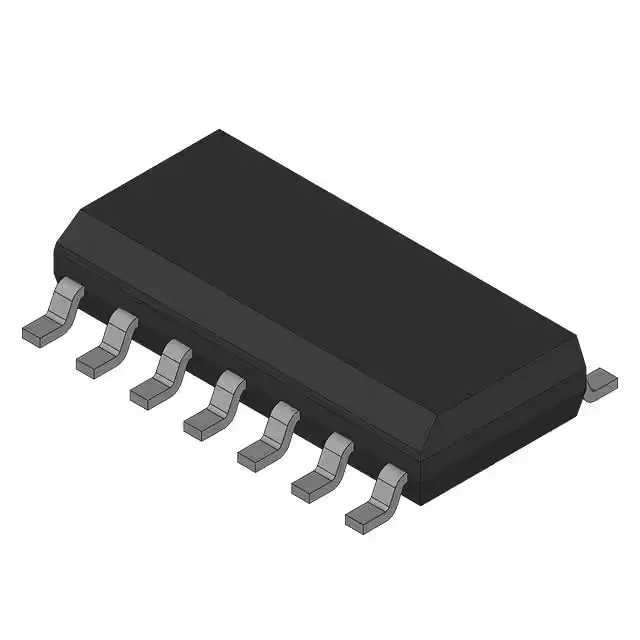
Texas Instruments TLV2784CD — Analog & Data Acquisition

Texas Instruments TLV2784CD quad op-amp, 8 MHz

MPNTLV2784CD
End of Life

Texas Instruments TLV2784CD quad general-purpose op-amp, 8 MHz gain-bandwidth, 5 V/µs slew rate, rail-to-rail output, 1.8 V to 3.6 V supply, 650 µA per channel, 14-SOIC package, 0°C to 70°C.

$0.8Ref. price · indicative, final on quote
Packaging14-SOIC (0.154", 3.90mm Width)
RoHSROHS3 Compliant
Independent supplier — new & surplus stockAuthenticity-screened · ESD-safe packingListing updated Aug 2026

Specifications

TLV2784CD specifications
ParameterValue
Output typeRail-to-Rail
MountingSurface Mount
Amplifier typeGeneral Purpose
Voltage - input offset250 µV
Voltage - supply span3.6 V
Current - supply650µA (x4 Channels)
Current - input bias2.5 pA
Current - output (Channel)23 mA
Operating temperature0°C ~ 70°C
Gain bandwidth product8 MHz
PackageBulk
Slew rate5V/µs
Case14-SOIC (0.154\", 3.90mm Width)
Number of circuits4

Product details

8 MHz quad op-amp for low-voltage signal chains

The Texas Instruments TLV2784CD is a quad-channel, general-purpose CMOS operational amplifier in a 14-SOIC package.

Rail-to-rail output with 250 µV offset

The output stage swings rail-to-rail, preserving dynamic range when the supply is as low as 1.8 V — a single Li-ion cell or two alkaline cells can power it directly. Input bias current is 2.5 pA, so the part does not load high-impedance sources such as pH probes or photodiode transimpedance stages.

Active lifecycle, ROHS3 compliant

The listed package is Bulk (tube).

Frequently asked questions

What are the alternatives or replacements for TLV2784CD?

A close parametric peer is the OPA4374AIPWT — also a quad CMOS rail-to-rail output op-amp in a similar package, with 6.5 MHz GBW and 5 V/µs slew rate. The TLV9351IDCKR is a single-channel alternative with wider bandwidth (3.5 MHz) and higher slew rate (20 V/µs), but it is a single, not a quad. Neither is a direct drop-in replacement; verify pinout and compensation before substituting.