The 8 MHz GBW supports small-signal bandwidths up to several hundred kHz with closed-loop gain, while the 5 V/µs slew rate handles large-signal transients like step responses in multiplexed inputs without excessive distortion.
The supply span runs from 1.8 V minimum to 3.6 V maximum. That 1.8 V floor lets this op-amp run directly from a single lithium-ion cell down to its end-of-discharge voltage without a boost converter. The 3.6 V ceiling covers a regulated 3.3 V rail with margin for ripple. No separate higher-voltage rail is needed, which simplifies the power tree in portable or space-constrained designs.
650 µA per channel — power budget for multi-channel boards
Each amplifier draws 650 µA of supply current, so the dual-channel TLV2783IDR consumes about 1.3 mA total quiescent. For a four-op-amp signal chain using two of these devices, the analog section stays under 3 mA — a reasonable allocation for a battery-powered sensor node or a multi-channel data-acquisition front end that also runs an MCU and ADC.
No derating is needed across the full temperature range for the supply current or output drive figures listed in the datasheet typicals.
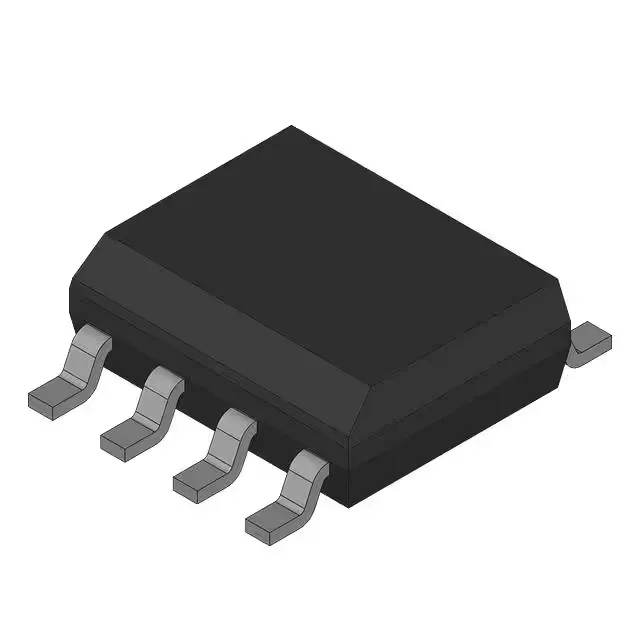
14-SOIC package — dual-channel footprint
The 14-SOIC land pattern is well-supported in assembly; no fine-pitch or BGA reflow concerns.
ROHS3 compliant per the listing.