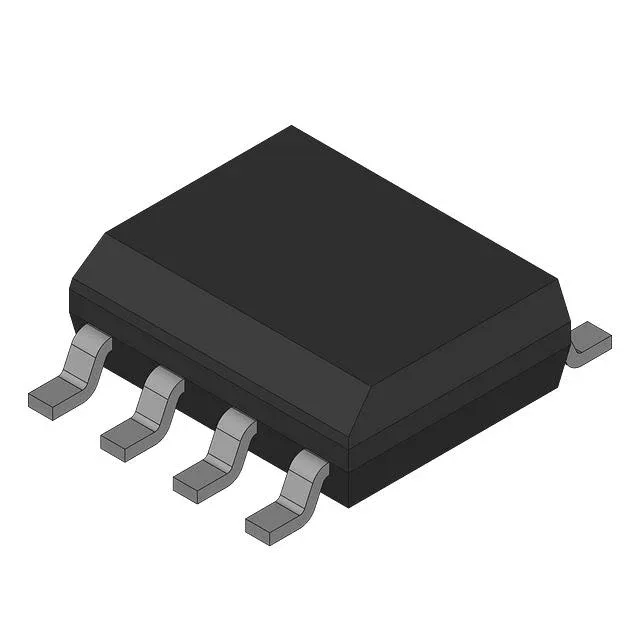
Texas Instruments TLV2771AID — Analog & Data Acquisition

TI TLV2771AID CMOS Op-Amp, 5.1 MHz, AEC-Q100

MPNTLV2771AID
End of Life

Texas Instruments TLV2771AID, CMOS rail-to-rail op-amp, 5.1 MHz gain bandwidth, 10.5 V/µs slew rate, 2.5 V to 5.5 V supply, 1 mA supply current, 8-SOIC package, -40°C to 125°C, AEC-Q100 qualified.

$0.94Ref. price · indicative, final on quote
Packaging8-SOIC (0.154", 3.90mm Width)
RoHSROHS3 Compliant
SeriesAutomotive, AEC-Q100
Independent supplier — new & surplus stockAuthenticity-screened · ESD-safe packingListing updated Aug 2026

Specifications

TLV2771AID specifications
ParameterValue
SeriesAutomotive, AEC-Q100
Output typeRail-to-Rail
MountingSurface Mount
Amplifier typeCMOS
Voltage - input offset500 µV
Voltage - supply span5.5 V
Current - supply1mA
Current - input bias2 pA
Current - output (Channel)50 mA
Operating temperature-40°C ~ 125°C (TA)
Gain bandwidth product5.1 MHz
PackageBulk
Slew rate10.5V/µs
Case8-SOIC (0.154\", 3.90mm Width)
Number of circuits1

Product details

The 1 mA quiescent current keeps the thermal budget manageable when multiple amplifiers share a board.

500 µV input offset, 2 pA bias — the precision side

These figures place the TLV2771AID in the mid-precision tier — adequate for many automotive sensor interfaces (pressure, temperature, position) where the signal is in the tens of millivolts. The 2 pA bias current is low enough that high-impedance sources like piezo or photodiode sensors will not see significant loading error, though for sub-millivolt accuracy a chopper-stabilized amplifier would be the next step up.

50 mA output drive — what it can and cannot do

It is not intended for power-amplifier stages or heavy loads — stay within the SOA and package dissipation limits for the 8-SOIC.

Frequently asked questions

Is TLV2771AID obsolete?

No. It remains a current product for new designs.

What is the gain bandwidth product of TLV2771AID?

The gain-bandwidth product is 5.1 MHz, with a slew rate of 10.5 V/µs.

Can TLV2771AID be used in single-supply applications?

Yes.