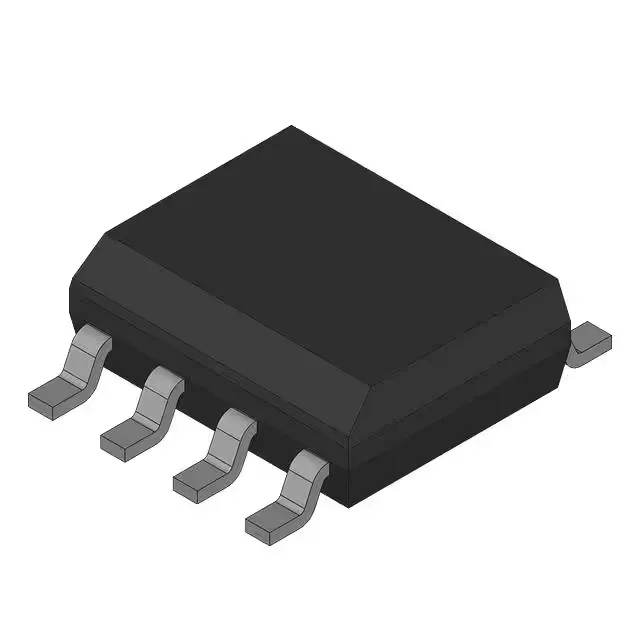
Texas Instruments TLV2630ID — Analog & Data Acquisition

TI TLV2630ID Op-Amp, 9 MHz GBW, 10 V/µs Slew Rate, 8-SOIC

MPNTLV2630ID
End of Life

Texas Instruments TLV2630ID, General Purpose Op-Amp, 1 Circuit, 9 MHz Gain Bandwidth, 10 V/µs Slew Rate, Rail-to-Rail Output, 2.7 V to 5.5 V Supply, -40°C to 125°C, 8-SOIC Package.

$0.51Ref. price · indicative, final on quote
Packaging8-SOIC (0.154", 3.90mm Width)
RoHSROHS3 Compliant
Independent supplier — new & surplus stockAuthenticity-screened · ESD-safe packingListing updated Aug 2026

Specifications

TLV2630ID specifications
ParameterValue
Output typeRail-to-Rail
MountingSurface Mount
Amplifier typeGeneral Purpose
Voltage - input offset5 µV
Voltage - supply span5.5 V
Current - supply1.5mA
Current - input bias50 pA
Current - output (Channel)28 mA
Operating temperature-40°C ~ 125°C
Gain bandwidth product9 MHz
PackageTube
Slew rate10V/µs
Case8-SOIC (0.154\", 3.90mm Width)
Number of circuits1

Product details

What the TLV2630ID brings to the signal chain

Input offset voltage is typically 5 µV, which puts it well ahead of commodity op-amps for DC-accurate applications like weigh scales, current sensing, or thermocouple amplification.

Supply range and temperature — fits industrial and automotive environments

This is not a commercial-grade part; it is rated for the extended temperature band where many precision applications live.

Package and footprint — standard 8-SOIC

No exotic land pattern or thermal pad — just a straightforward two-layer board layout with local decoupling near the supply pins.

For production planning, this means no forced redesign cycle from the manufacturer's side.

Frequently asked questions

Is TLV2630ID rail-to-rail?

The output is rail-to-rail, meaning it can swing within millivolts of the positive and negative supply rails. This is specified in the Output Type field as Rail-to-Rail.

What is the closest functional equivalent to TLV2630ID?

A close functional peer is the TLV9351IDCKR, a single-channel general-purpose op-amp in a smaller package (SC-70-5) with a 3.5 MHz GBW and 20 V/µs slew rate. The TLV2630ID offers higher GBW (9 MHz) and lower input offset (5 µV typical vs 350 µV), while the TLV9351 draws lower supply current. The choice depends on whether precision or power budget drives the BOM.