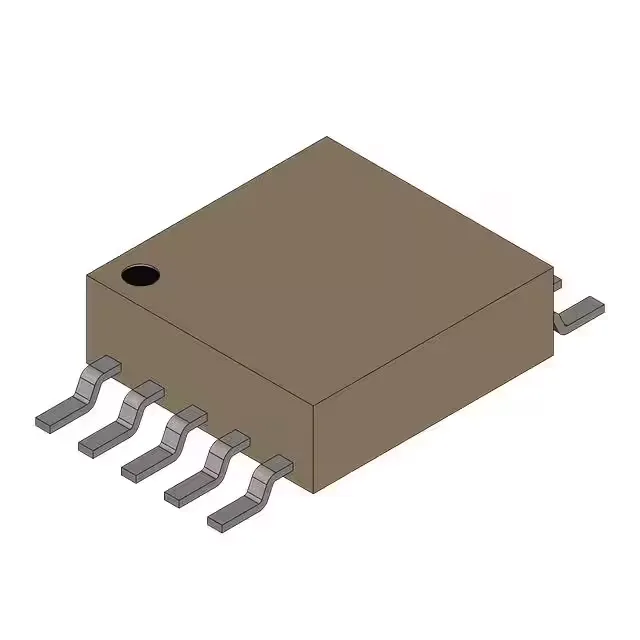
Texas Instruments TLV2422MUB — Logic ICs

TLV2422MUB Texas Instruments Op Amp, AEC-Q100, 5.3 MHz

MPNTLV2422MUB
End of Life

Texas Instruments TLV2422MUB, Automotive AEC-Q100 LinCMOS™, dual general-purpose op amp, 5.3 MHz GBW, 0.02 V/µs slew rate, rail-to-rail output, 100 µA per channel, 2.7–10 V supply, -55 to 125°C, 10-CFP hermetic ceramic flatpack.

$29.9Ref. price · indicative, final on quote
Packaging10-CDFF
StockContact for availability
MOQ1 pcs
  • 100% new & originalTraceable channels only — no refurbs, no pulls, no remarked parts.
  • Date & lot codes on quoteStated per line before you commit; label photos on request.
  • MSL-compliant ESD packingMoisture-sealed bags with indicator cards; reels photo-verified.
  • PayPal buyer protectionPay by T/T, PayPal or Payoneer — card payments covered end to end.

Specifications

TLV2422MUB Technical Specifications
ParameterValue
SeriesAutomotive, AEC-Q100, LinCMOS™
Output typeRail-to-Rail
Mounting typeSurface Mount
Amplifier typeGeneral Purpose
Voltage - input offset300 µV
Voltage - supply span2.7 V
Current - supply100µA (x2 Channels)
Current - input bias1 pA
Current - output (Channel)12 mA
Operating temperature-55°C ~ 125°C (TA)
Gain bandwidth product5.3 MHz
PackageBulk
Slew rate0.02V/µs
Case10-CDFF
Number of circuits2

Product details

AEC-Q100 dual op amp in a hermetic ceramic flatpack

It delivers a gain-bandwidth product of 5.3 MHz with a supply current of just 100 µA per channel, making it a fit for always-on sensor conditioning in battery-backed or thermally harsh environments. The rail-to-rail output stage allows direct interface to ADCs or comparators without a second supply rail.

The 0.02 V/µs slew rate is the headline limitation on this part. At full 10 V output swing, the maximum undistorted frequency is roughly 300 Hz. For a 1 V peak-to-peak signal, that extends to about 3 kHz. This is not a part for audio line drivers, fast ADC buffers, or any waveform requiring more than a few kilohertz of small-signal bandwidth. Where it works is DC-accurate amplification, thermocouple conditioning, strain-gauge bridges, and any low-frequency loop where the 5.3 MHz GBW is used for DC gain, not AC bandwidth.

100 µA per channel — the battery-life enabler

At 100 µA per channel quiescent, the TLV2422MUB draws 200 µA total for both amplifiers. In a 24/7 sensor node powered by a 500 mAh primary cell, that alone accounts for about 4 mA·h per day — leaving most of the budget for the MCU and radio. The 1 pA input bias current (typical) also means the external resistor divider or photodiode bias network does not need to fight a DC error term. For always-on automotive cabin sensors or remote industrial transmitters, this quiescent number is the selection gate.

Hermetic 10-CFP — procurement implications

The 10-CDFF / 10-CFP is a ceramic dual flatpack with gold-plated leads, not a plastic SOIC or TSSOP. This package is standard for high-reliability programs that require hermeticity — MIL-STD-883 screening, space-level lot acceptance, or long-life sealed modules. The surface-mount footprint is non-standard compared to JEDEC plastic packages; verify the land pattern against the package drawing before committing the PCB. Sourcing is through independent distribution channels that handle ceramic and hi-rel inventory; this is not a part stocked in high volume at general-purpose distributors.

Frequently asked questions

What is the closest functional second-source for TLV2422MUB?

It is not a pin-compatible drop-in replacement due to the different package and footprint.

Can TLV2422MUB replace TLV2422ID?

The TLV2422ID is the same die in a plastic SOIC-8 package. The TLV2422MUB uses a hermetic 10-CFP ceramic package with a different footprint and pinout. Electrically the two are equivalent, but the PCB land pattern and thermal management differ — verify the package drawing before substituting.