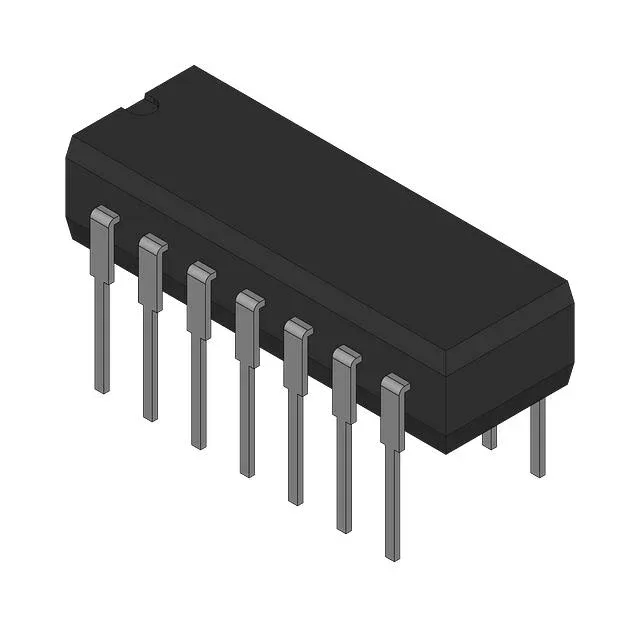
JFET quad op-amp in a hermetic CDIP — built for the wide-temperature, high-impedance signal chain
The Texas Instruments TLE2064AMJB is a JFET-input quad operational amplifier in a 14-lead ceramic DIP (14-CDIP). The four amplifiers share a common supply spanning 7 V to 36 V, making it comfortable on ±15 V bipolar rails or a single 12 V or 24 V industrial supply.
4 pA input bias — the reason you pick a JFET over a bipolar op-amp
The 4 pA typical input bias current is the headline differentiator. For photodiode amplifiers, pH probe buffers, or any high-impedance sensor interface, a bipolar op-amp's nanoamp-level bias would swamp the signal and force a larger feedback resistor. The JFET stage also keeps input voltage noise low at high source impedances. The trade-off is a higher input offset voltage — 900 µV typical — so precision DC applications below 1 mV may need a chopper or auto-zero amplifier instead.
The supply span from 7 V minimum to 36 V maximum covers the common industrial rails: single 12 V or 24 V, and split ±5 V, ±12 V, or ±15 V. This eliminates a secondary regulator when the rest of the board runs on a higher bus. The quiescent current is 1.25 mA per amplifier (5 mA total for the quad), which is modest for a JFET part and helps keep the thermal budget under control inside the hermetic CDIP.
14-CDIP ceramic package — hermetic seal, through-hole assembly
It mounts through-hole, which simplifies hand-assembly, rework, and socketing in test fixtures or high-reliability boards. The ceramic body resists moisture and outgassing better than plastic, making it the standard choice for military, space, and downhole applications.
Active lifecycle, but RoHS non-compliant — plan the BOM accordingly
For new designs or legacy support, the supply channel is stable. However, the part is RoHS non-compliant — the lead-bearing solder finish on the CDIP pins is typical for hermetic military-grade components. If your assembly line or end-market requires RoHS compliance, this part cannot be used without an exemption or a waiver. For RoHS-mandated builds, consider a surface-mount JFET quad in a plastic package (e.g., TLE2064AIDW or similar SOIC variant) if the temperature range and hermeticity are not required.
For production quantities, lead time is quoted per order; for small quantities or urgent BOM fills, the independent channel can often locate date-code-lotted inventory from multiple sources.