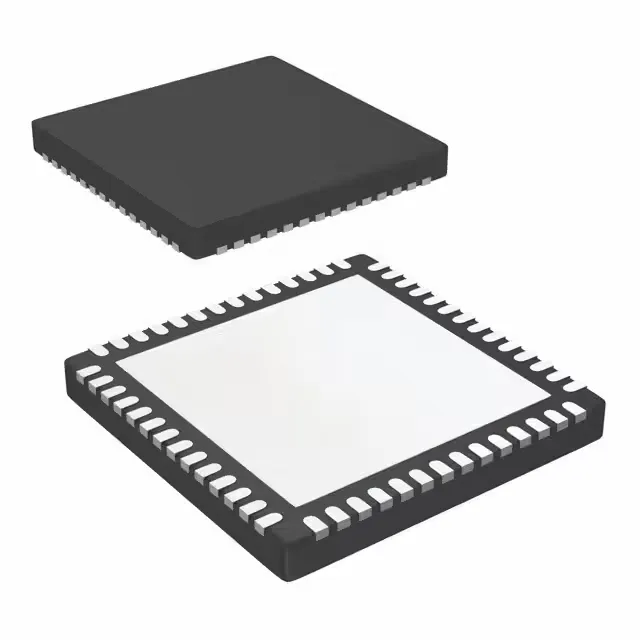
Texas Instruments TLC5954RTQT — Discrete Semiconductors

TLC5954RTQT LED Driver, 48-Channel, 24.4/34.9 mA, 56-QFN

MPNTLC5954RTQT
End of Life

Texas Instruments TLC5954RTQT linear LED driver, shift register topology, 48 outputs, 10 V output, 24.4/34.9 mA per channel, 56-VFQFN exposed pad, surface mount.

$5.84Ref. price · indicative, final on quote
Packaging56-VFQFN Exposed Pad
RoHSROHS3 Compliant
Sourced new & surplus through independent channelsAuthenticity-screened · ESD-safe packingListing updated Aug 2026

Specifications

TLC5954RTQT specifications
ParameterValue
TypeLinear
MountingSurface Mount
Voltage - output10V
Voltage3.6V
Current - output (Channel)24.4mA, 34.9mA
I/O channels48
Operating temperature-40°C ~ 85°C (TA)
PackageTape & Reel (TR); Cut Tape (CT)
TopologyShift Register
ApplicationsSignage
Case56-VFQFN Exposed Pad
Internal switchYes

Product details

48-channel LED driver for signage — what the ratings mean

The TLC5954RTQT is a 48-output linear LED driver with a shift register interface, delivering 24.4 mA or 34.9 mA per channel at a 10 V output compliance. That 48-channel count means a single IC drives a full column of an LED matrix or a large alphanumeric display segment without external shift registers — the internal topology handles serial data in and latches it across all outputs simultaneously. The dual current setting (24.4 mA and 34.9 mA) lets the same BOM serve two brightness tiers — lower current for indoor signage where power budget matters, higher for outdoor or high-ambient-light panels where luminance must punch through.

Package and thermal — 56-QFN exposed pad

Housed in a 56-VFQFN exposed pad package (8x8 mm), the TLC5954RTQT requires a thermal via array under the centre pad to pull heat into the PCB ground plane.

Frequently asked questions

Will TLC5954RTQT drop into a board designed for TLC5940RHBR?

No. The TLC5940RHBR has 16 outputs and a 0.12 A per-channel rating, versus 48 outputs at 24.4/34.9 mA for the TLC5954RTQT. The pinout and package (56-QFN vs 32-QFN) are different — a board spin is required.