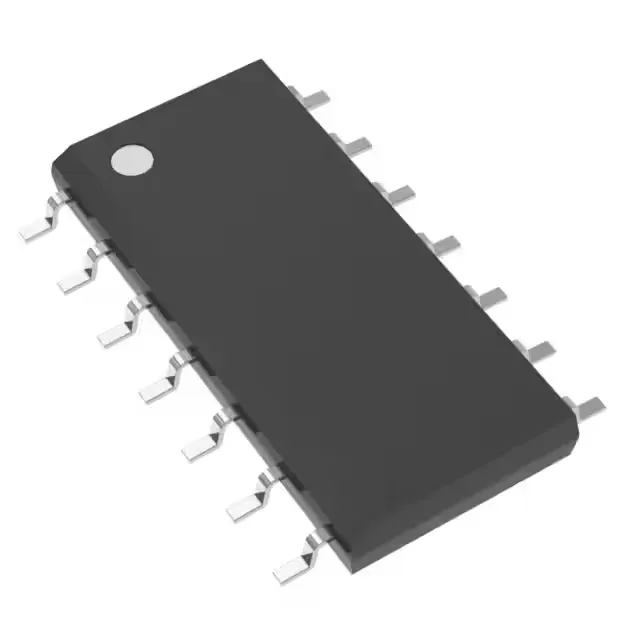
Texas Instruments TLC27M4CD — Logic ICs

TLC27M4CD Texas Instruments LinCMOS Quad Op-Amp, 525 kHz

MPNTLC27M4CD
End of Life

Texas Instruments LinCMOS™ series, TLC27M4CD, General Purpose Amplifier, 4 Circuit, 525 kHz, 0.62V/µs, 3V to 16V, 570µA, 14-SOIC, 0°C to 70°C.

$1.65Ref. price · indicative, final on quote
Packaging14-SOIC (0.154", 3.90mm Width)
RoHSROHS3 Compliant
SeriesLinCMOS™
Independent supplier — new & surplus stockAuthenticity-screened · ESD-safe packingListing updated Aug 2026

Specifications

TLC27M4CD specifications
ParameterValue
SeriesLinCMOS™
MountingSurface Mount
Amplifier typeGeneral Purpose
Voltage - input offset1.1 mV
Voltage - supply span16 V
Current - supply570µA (x4 Channels)
Current - input bias0.7 pA
Current - output (Channel)30 mA
Operating temperature0°C ~ 70°C
Gain bandwidth product525 kHz
PackageTube
Slew rate0.62V/µs
Case14-SOIC (0.154\", 3.90mm Width)
Number of circuits4

Product details

LinCMOS quad op-amp for multi-channel signal conditioning

The Texas Instruments TLC27M4CD is a quad-channel, general-purpose operational amplifier built on the LinCMOS™ process. It packs four independent op-amps into a single 14-SOIC package, drawing a total supply current of 570 µA across all four channels. The 0.7 pA input bias current and 1.1 mV input offset voltage give it the DC precision needed for thermocouple amplifiers, photodiode transimpedance stages, and other low-level analog front-ends that cannot tolerate the drift of a bipolar-input part.

There is no LTB window to track, and no official successor has been issued — the part remains a current-production catalog item from Texas Instruments.

Frequently asked questions

What is the closest functional equivalent to TLC27M4CD?

A functional peer is the OPA4374AIPWT from Texas Instruments, also a quad CMOS op-amp in a similar package. The OPA4374 offers a wider bandwidth of 6.5 MHz and a 5 V/µs slew rate, but its supply current is comparable at 600 µA. The TLC27M4CD has a lower input bias current (0.7 pA vs 0.5 pA) and a wider supply range (3 V to 16 V vs 2.7 V). The choice depends on whether the application needs the higher slew rate of the OPA4374 or the wider supply headroom of the TLC27M4CD.