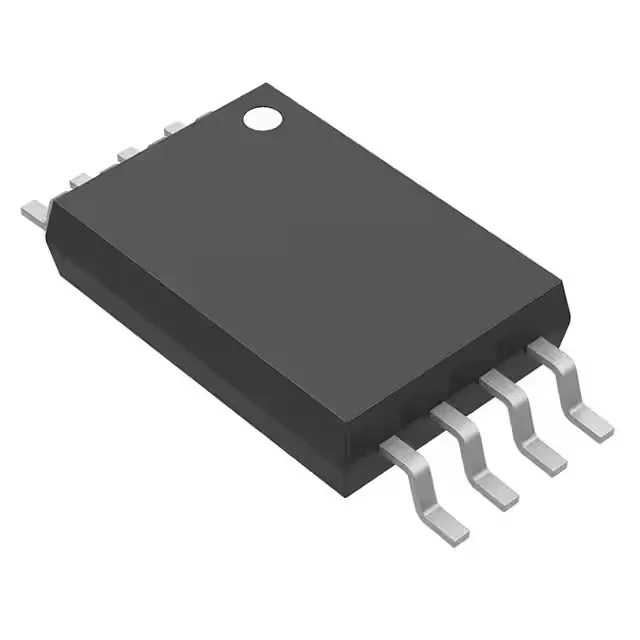
What this dual CMOS op-amp is for
The 110 kHz gain-bandwidth product and 0.03 V/µs slew rate tell you this part is for slow, precision signals — think thermocouple amplifiers, photodiode front-ends, or micropower filters — not audio or motor-control loops.
Input bias current — the photodiode and high-Z signal play
The 0.6 pA typical input bias current is exceptionally low, a direct benefit of the CMOS input stage. For a photodiode amplifier or a pH probe buffer, that bias current won't swamp the signal — you can use feedback resistors in the tens of megohms without the offset error climbing into the millivolt range. The 1.1 mV input offset voltage is typical for a CMOS part at this price point; if your application needs sub-millivolt precision, you'll want to null it or select a trimmed variant.
The 8-TSSOP package (0.173" body width) is a compact footprint; verify your PCB land pattern matches the 4.40 mm width before layout.
No last-time-buy notice, no NRND flag — it's a current-production part.