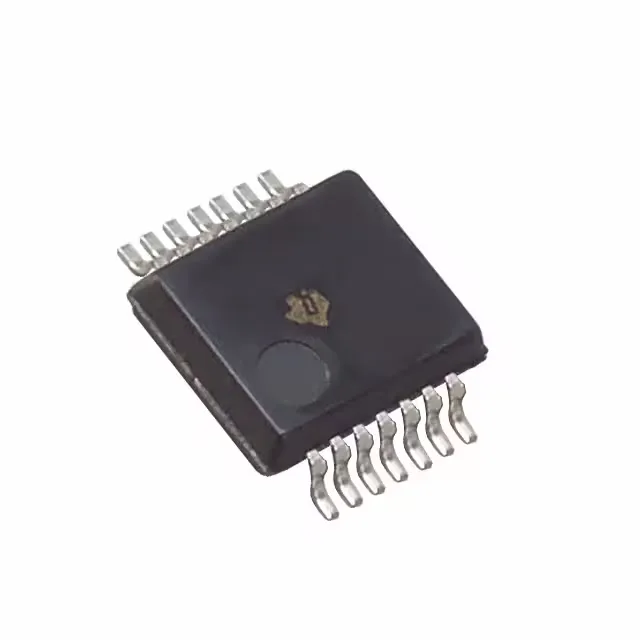
With a CMOS input stage the input bias current is just 0.6 pA, making it a solid choice for high-impedance sensor conditioning, active filters, and signal buffering in indoor, line-powered equipment — think bench instruments, appliance control boards, and office automation.
The 3.6 V/µs slew rate and 2.2 MHz GBW place this part firmly in the general-purpose tier. It can reproduce a 10 V peak-to-peak sine wave cleanly up to about 57 kHz — fine for audio, process-control loops, and sensor filtering, but not for video or fast ADC drivers. The 0.6 pA input bias means you can use megohm-range feedback resistors without significant DC error, so it pairs well with photodiodes or pH probes where source impedance is high.
The TLC274CDB operates from a 3 V minimum supply up to 16 V maximum, covering the common 5 V and 12 V single-rail systems as well as ±5 V or ±8 V split supplies. Each of the four amplifiers can source or sink 30 mA — enough to drive a headphone, an LED, or the input of a following ADC, but not a relay coil or motor. The output is not rail-to-rail, so expect a volt or more of headroom on each rail depending on load.
It is not qualified for automotive under-hood or outdoor telecom enclosures where extended temperature is required.
No last-time-buy risk for new designs.