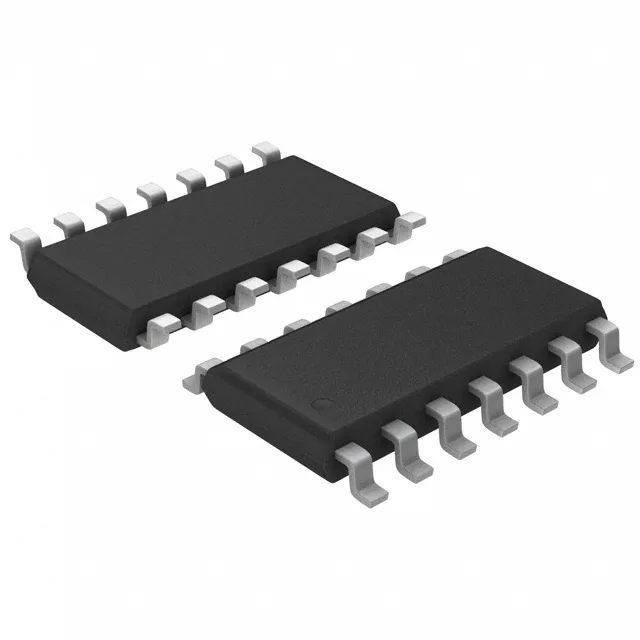
Texas Instruments TLC274BCDR — DC-DC Power Modules

TLC274BCDR TI General Purpose Op-Amp, 2.2 MHz, 3.6V/µs

MPNTLC274BCDR
End of Life

Texas Instruments TLC274BCDR, quad general-purpose op-amp, 2.2 MHz gain bandwidth, 3.6V/µs slew rate, 0.6 pA input bias, 3 V to 16 V supply, 14-SOIC package, 0°C to 70°C.

$2.34Ref. price · indicative, final on quote
Packaging14-SOIC (0.154", 3.90mm Width)
StockContact for availability
MOQ1 pcs
  • 100% new & originalTraceable channels only — no refurbs, no pulls, no remarked parts.
  • Date & lot codes on quoteStated per line before you commit; label photos on request.
  • MSL-compliant ESD packingMoisture-sealed bags with indicator cards; reels photo-verified.
  • PayPal buyer protectionPay by T/T, PayPal or Payoneer — card payments covered end to end.

Specifications

TLC274BCDR Technical Specifications
ParameterValue
Mounting typeSurface Mount
Amplifier typeGeneral Purpose
Voltage - input offset340 µV
Voltage - supply span16 V
Current - supply2.7mA (x4 Channels)
Current - input bias0.6 pA
Current - output (Channel)30 mA
Operating temperature0°C ~ 70°C
Gain bandwidth product2.2 MHz
PackageTape & Reel (TR); Cut Tape (CT)
Slew rate3.6V/µs
Case14-SOIC (0.154\", 3.90mm Width)
Number of circuits4

Product details

Quad general-purpose op-amp with CMOS inputs — 2.2 MHz, 14-SOIC

The Texas Instruments TLC274BCDR is a quad-channel general-purpose op-amp in a 14-SOIC package, built on a CMOS process that delivers 0.6 pA input bias current — low enough to interface directly with high-impedance sensors without a separate buffer. Each of the four amplifiers provides a 2.2 MHz gain-bandwidth product and a 3.6V/µs slew rate, adequate for audio-band signal conditioning, active filters below 200 kHz, and multi-channel data acquisition front-ends. The supply range spans 3 V to 16 V, allowing single-rail operation at 5 V or split supplies up to ±8 V. Output current is rated 30 mA per channel, sufficient to drive a 2 kΩ load to within a few hundred millivolts of the rails.

0°C to 70°C — commercial temperature grade, indoor use only

The operating temperature range is 0°C to 70°C, which places this part in the commercial-grade bucket. It is suited for benchtop instruments, office equipment, appliance control boards, and indoor industrial panels where ambient temperature stays within that window. If the design must survive −40°C cold starts or 85°C+ enclosures, a different grade — such as the TLV9362IDDFR rated −40°C to 125°C — would be the correct choice.

Supply voltage range: 3 V to 16 V — single 5 V operation confirmed

The TLC274BCDR operates from a minimum supply of 3 V up to a maximum of 16 V. This covers the common 5 V single-supply rail (the part runs fine on a single 5 V supply) as well as ±5 V split supplies. At 5 V the input common-mode range extends from the negative rail to about 1.5 V below the positive rail — not rail-to-rail on the input side. The output can swing within about 100 mV of the rails under light load, but at 30 mA output the swing is reduced. For rail-to-rail input/output, a newer CMOS part like the OPA4374 would be needed.

Sourcing and availability — active, quoted to order

The 14-SOIC package ships in Tape & Reel (TR) or Cut Tape (CT) options, matching standard pick-and-place assembly lines.

Frequently asked questions

Can TLC274BCDR operate with a single 5V supply?

Yes. The supply range is 3 V to 16 V, so a single 5 V rail is well within spec. The input common-mode range does not reach the positive rail, but the output can swing close to both rails under light load.

What is the replacement or equivalent for TLC274BCDR?

There is no direct pin-compatible replacement listed in TI's current portfolio. The TLV9362IDDFR is a newer quad op-amp with rail-to-rail output, higher slew rate (25 V/µs), and wider temperature range (−40°C to 125°C), but it is a different pinout (14-SOIC vs possibly different). The OPA4374 is a quad CMOS rail-to-rail op-amp in a similar package but with 6.5 MHz GBW and 5 V/µs slew rate. Neither is a drop-in replacement — verify the pinout and compensation before substituting.