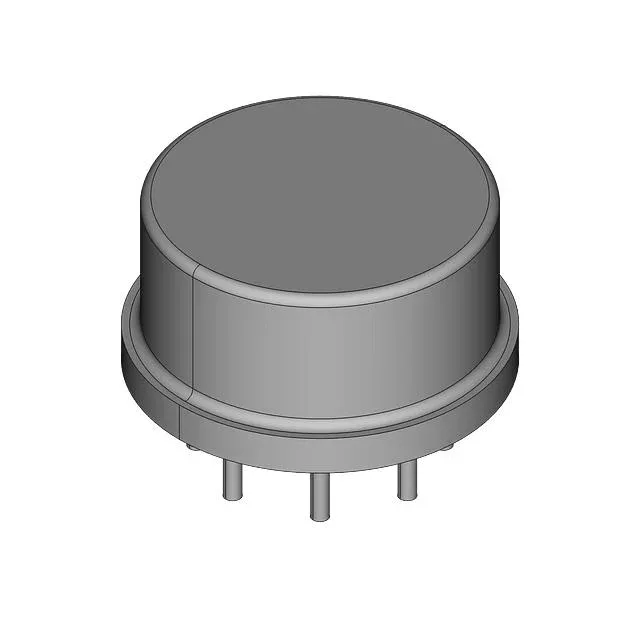
Chopper-stabilised precision in a metal can
It combines a 1.9 MHz gain-bandwidth product with a 2.9 V/µs slew rate, targeting applications where DC offset drift over temperature and time must be minimised — think load-cell conditioning, thermocouple amplification, or battery-monitor sense circuits in automotive ECUs. Housed in a TO-99-8 metal can with through-hole mounting, this is not a part you drop into a modern SMT pick-and-place line. The hermetic metal package suits high-reliability, sealed-environment, or retrofit scenarios where the board is hand-assembled or reworked. Input bias current is 50 pA typical, and the output can source or sink 50 mA.
4.6 V to 16 V supply — single or split rails
The TLC2654MLB operates from a 4.6 V minimum to 16 V maximum supply span. That covers a standard 5 V or 12 V automotive rail with margin, or a split ±2.3 V to ±8 V configuration. The 1.5 mA quiescent supply current is moderate — not a micropower part, but acceptable for always-on sense blocks where drift performance matters more than battery life.
Military temperature range, automotive grade
Active production, RoHS non-compliant
Note the RoHS non-compliant flag: the TO-99 metal can uses lead-bearing solder dip or tin-lead plating on the leads. If your BOM requires full RoHS exemption compliance (lead exempt for high-reliability or military per Annex III), this fits; for general commercial RoHS, it does not.