What this dual CMOS op-amp brings to an automotive or high-reliability BOM
It delivers a gain bandwidth product of 730 kHz with a 0.55 V/µs slew rate, rail-to-rail output swing, and draws 425 µA per channel from a 4.4 V to 16 V supply.
Reworking the 10-CFP ceramic flatpack
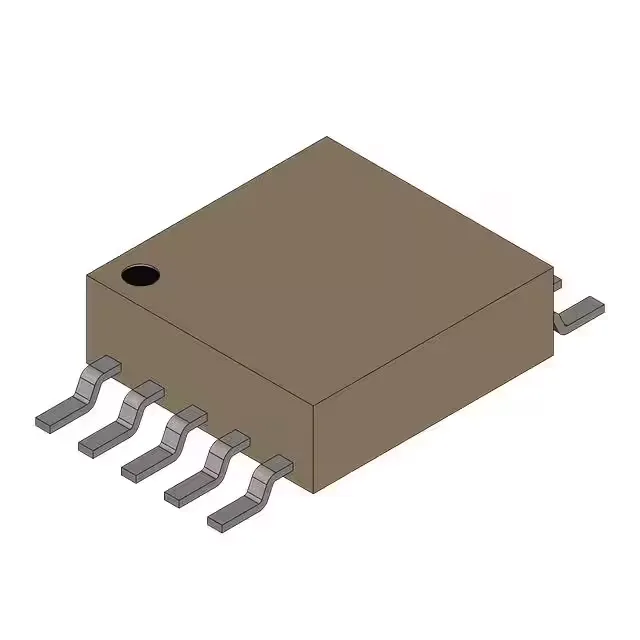
The TLC2262AMUB comes in a 10-CDFF (10-CFP) ceramic flatpack — a hermetic, surface-mount package with gull-wing leads. Unlike plastic SOIC, the ceramic body has higher thermal mass; a preheat soak at 150°C for 60 seconds before hot-air removal reduces the risk of pad lift or package crack. The package outline is small enough that a fine-tip hot-air nozzle at 350°C with low airflow (setting 3 on a typical station) will lift the part cleanly if the board is preheated.
Active lifecycle and compliance reality
Note that the part is RoHS non-compliant (leaded solder terminations on the ceramic package), which is typical for hermetic military/space-grade components. This matters for EU RoHS-exempt applications or projects where lead-free assembly is mandatory.
Where the specs matter for the design
The 730 kHz gain bandwidth and 0.55 V/µs slew rate suit this op-amp for sensor signal conditioning, low-frequency active filters, and control loops — not for video or high-speed ADC drive. Input bias current is 1 pA (typical), which keeps offset drift low when working with high-impedance sensors like piezoelectric or pH probes.