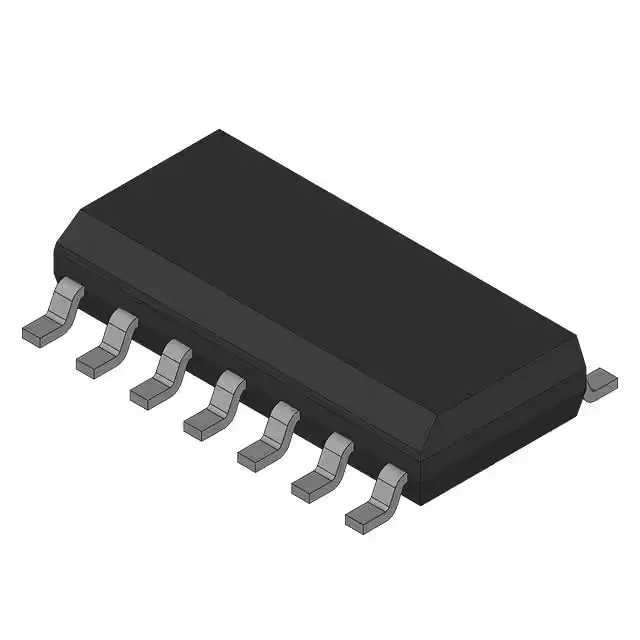
The TLC083AIDR: The AEC-Q100 qualification (series Automotive, AEC-Q100) is the key differentiator for this part.
Key parametric ratings and their design impact
The 10 MHz gain-bandwidth product and 19 V/µs slew rate place this op-amp in the mid-speed class, adequate for audio-frequency signal chains, PWM-loop filtering, and sensor conditioning up to several hundred kilohertz. Input bias current is a mere 3 pA, which minimizes offset errors in high-impedance sensor interfaces. The supply current of 1.9 mA for both amplifiers keeps the power budget lean in always-on automotive modules.
This is a widely used footprint shared by many dual op-amps, so board layout is straightforward. The package is rated MSL 1 or 2 (typical for SOIC), but always confirm the moisture sensitivity level from the lot-specific certificate of conformance if the part has been in storage beyond the floor-life window.
It is not subject to a last-time-buy or end-of-life notice. Because it is an active, automotive-grade part, the supply channel is stable, but the automotive market can see allocation spikes; dual-sourcing with a pin-compatible second source (such as the TLV9362IDDFR) is worth evaluating for high-run programs.