What the 2.495V reference buys you
That 2.495V floor is the starting point — you set the output anywhere above that up to 36 V with two external resistors. The ±2.2% tolerance on the reference means your output voltage stays within that band over temperature and load, which is tight enough for most power-supply feedback loops and monitoring circuits without needing a precision-grade part. It's the lower-voltage sibling in the TL431 family, sharing the same basic topology but with a lower minimum cathode voltage.
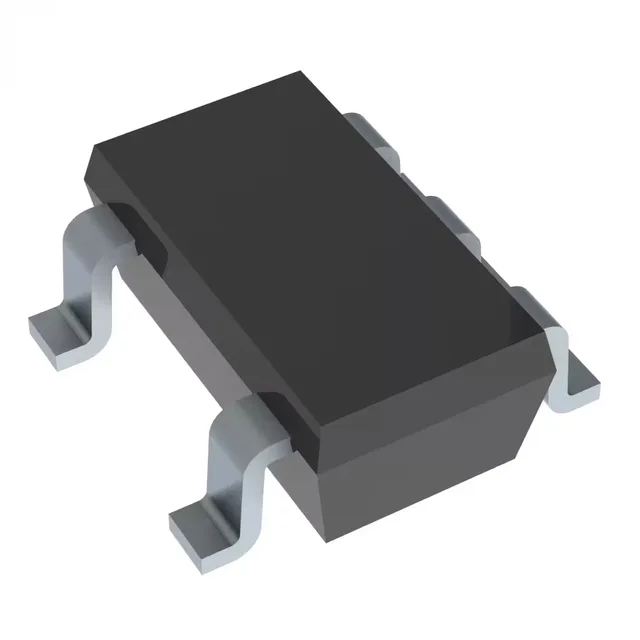
SOT-23-5: hand-solderable and board-friendly
The part comes in a SOT-23-5 package (also listed as SC-74A). No hidden pads under the body, so inspection is straightforward. The supplier device package is SOT-23-5, and the case code is SC-74A, SOT-753 — they refer to the same physical footprint. Surface-mount only, no through-hole variant in this suffix. If you need a breadboard-friendly version, grab a SOIC-8 TL432 or a small adapter board for the SOT-23-5.
100 mA output and 1 mA cathode current — what they mean
The 100 mA output current rating tells you the shunt can sink up to 100 mA while regulating. That's enough to drive an optocoupler LED in a feedback loop, bias a small load, or pull down a voltage divider. The 1 mA minimum cathode current is the minimum current you need to keep the device regulating — your bias resistor must deliver at least that much. Below 1 mA the reference may drop out of regulation.
You can design it into new builds without worrying about a last-time-buy window closing. The base product number is TL432, so any future PCNs or datasheet updates will track under that family.