2.495 V adjustable shunt reference — what the ±1% tolerance buys you
Its internal bandgap sets a 2.495 V minimum output, and with an external resistor divider the output can be programmed up to 36 V. The ±1% tolerance on the reference voltage means the feedback loop holds the output within 25 mV of the target at 25 °C — a precision tier that suits power-supply feedback, data-converter references, and supervisory circuits where a standard 2% or 5% part would eat into the error budget.
100 mA cathode current — thermal and load derating
The 100 mA output current rating is the maximum continuous current the shunt can sink from cathode to anode. In a typical series-pass regulator configuration, the external resistor must be sized so that the sum of the load current and the minimum cathode current (700 µA) stays below this ceiling across the full temperature range. At 85 °C ambient, the SOT-23-3 package's junction-to-ambient thermal resistance limits practical dissipation to roughly 200 mW, which translates to a derated continuous cathode current of about 55 mA at 36 V output — a real constraint for designs that push the part near its voltage maximum.
SOT-23-3 footprint and supply rails
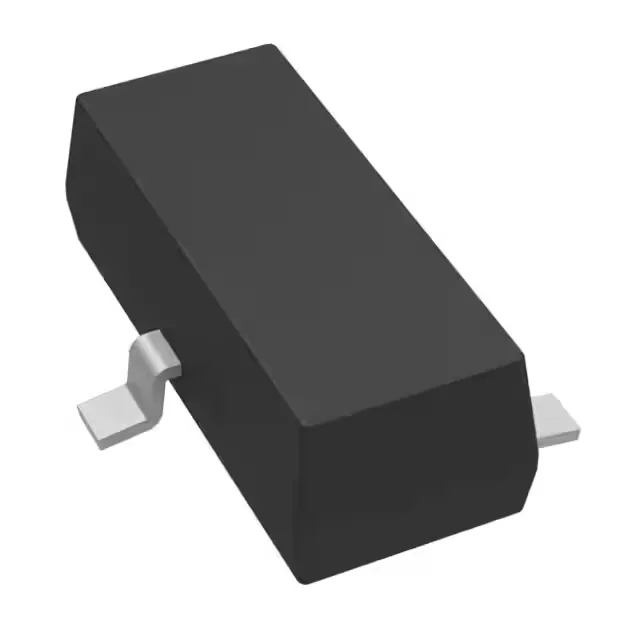
The SOT-23-3 package (TO-236-3 / SC-59) shares the same 0.95 mm pin pitch and 2.9 mm body length as the standard SOT-23 footprint. The cathode pin is the output; the reference pin is the feedback input; the anode connects to ground. No exposed pad — thermal relief is through the cathode trace copper area.
The base product number TL432 is a mature, widely second-sourced family — if a supply constraint ever emerges, pin-compatible alternatives from multiple manufacturers exist (e.g., the LMV431 or NCP431 variants in the same SOT-23-3 footprint).