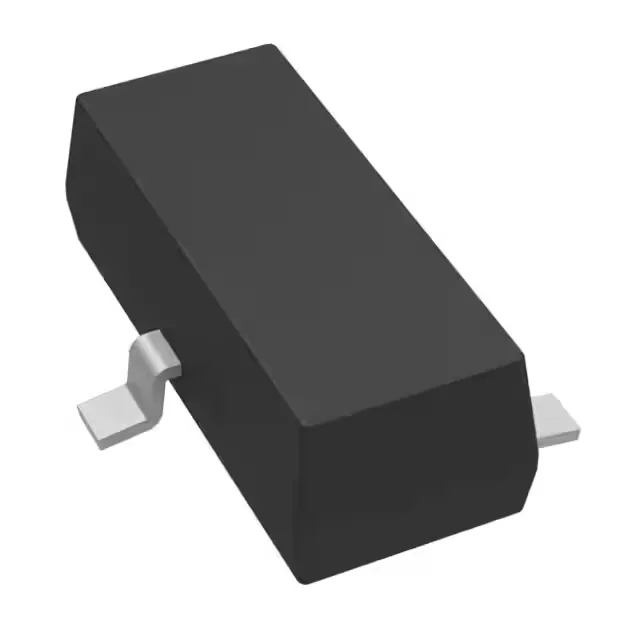
Rated for 100 mA continuous cathode current and a minimum of 600 µA to stay in regulation, this part fits precision power-supply feedback loops, adjustable linear regulators, and any circuit needing a stable voltage threshold without a dedicated reference IC.
Output current and cathode minimum — where the limits bite
The 100 mA output current is the maximum the shunt can sink while holding the reference voltage — above that the device drops out of regulation and the output voltage drifts. For a typical 2.5 V reference pulling 10 mA to bias an optocoupler, that leaves 90 mA of headroom, but if you are also supplying a downstream load through the same shunt, budget the total. The 600 µA minimum cathode current is the floor below which the reference stops regulating. In a low-power standby supply running at 200 µA total, this part will not work — you need a lower-I(min) reference or a different topology.