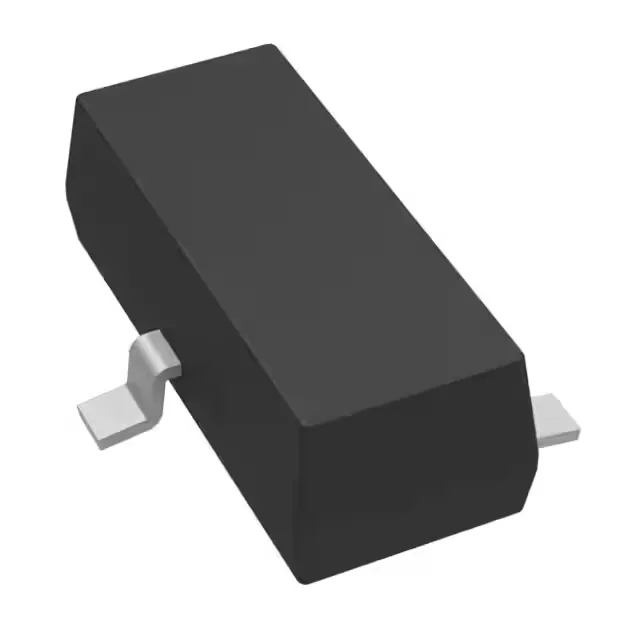
Adjustable shunt reference in a SOT-23-3 package
It sets a nominal 2.495 V reference between the cathode and the reference pin, and by adding two external resistors you can program the output voltage anywhere from 2.495 V up to 36 V. The shunt architecture means it acts like a zener diode but with much tighter tolerance and temperature stability — the ±2.2% tolerance on the reference voltage is a practical spec for setting a supply rail or a comparator threshold without trimming.
100 mA cathode current and 1 mA minimum bias
The device can sink up to 100 mA through the cathode, which is enough to drive an optocoupler LED in a feedback loop or to pull down a small relay coil through a transistor. For a typical 5 V rail with a 1 kΩ series resistor, the cathode current sits around 2.5 mA at the reference voltage, leaving headroom for load transients.
If your design needs to live in an engine bay, an outdoor telecom cabinet, or a factory floor without climate control, the TL431CDBZTG4 is not the right temperature grade — look for the TL431I (industrial, -40°C to 85°C) or TL431Q (automotive) variants in the same family. The 'C' in the part number is the temperature-grade indicator.