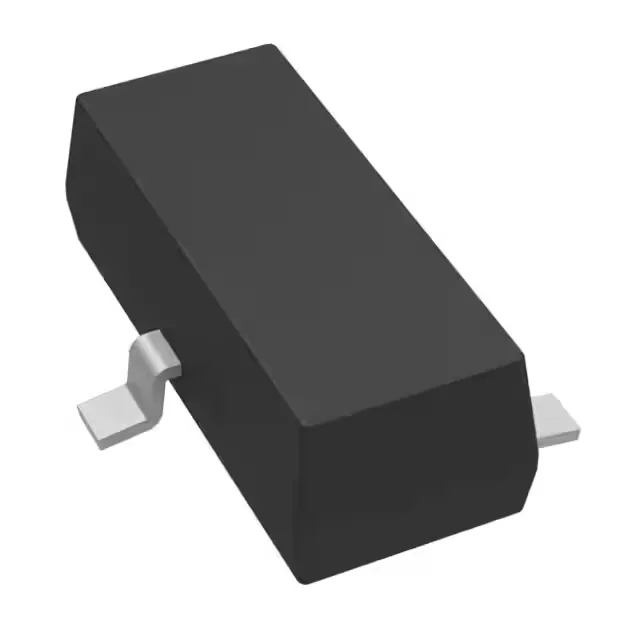
Texas Instruments TL4050C50IDBZT — Analog & Data Acquisition

TL4050C50IDBZT Shunt Voltage Reference, 5V ±0.5%, SOT-23-3

MPNTL4050C50IDBZT
End of Life

Texas Instruments TL4050C50IDBZT, precision shunt voltage reference, fixed 5V output, ±0.5% tolerance, 50ppm/°C, 15 mA output, SOT-23-3, -40°C to 85°C.

$1.86Ref. price · indicative, final on quote
PackagingTO-236-3, SC-59, SOT-23-3
RoHSROHS3 Compliant
Independent supplier — new & surplus stockAuthenticity-screened · ESD-safe packingListing updated Aug 2026

Specifications

TL4050C50IDBZT specifications
ParameterValue
Output typeFixed
MountingSurface Mount
Reference typeShunt
Voltage - output (Min (Fixed))5V
Output current15 mA
Current - cathode80 µA
Operating temperature-40°C ~ 85°C (TA)
PackageTape & Reel (TR); Cut Tape (CT)
Tolerance±0.5%
CaseTO-236-3, SC-59, SOT-23-3
Noise - 10Hz to 10kHz93µVrms
Temperature coefficient50ppm/°C

Product details

The TL4050C50IDBZT is a shunt voltage reference with a fixed 5V output and ±0.5% tolerance. It uses a two-terminal shunt topology and comes in a SOT-23-3 package.

Shunt topology — what it means for your bias network

The load current plus cathode current must exceed 80 µA to maintain regulation. Total current through the device must stay under 15 mA.

Active production, no obsolescence worry

No NRND or EOL flags. It's also ROHS3 compliant, so it passes lead-free assembly requirements without exemption paperwork.

Frequently asked questions

What is a suitable replacement for TL4050C50IDBZT?

A functional alternative is the LM4132AMF-4.1/NOPB, which is a series reference with ±0.05% tolerance and 20 ppm/°C drift, but it requires a 4.496V minimum input supply and a different bias topology — not a pin-for-pin swap. For a drop-in shunt replacement, stay within the TL4050 family at the same voltage and tolerance grade.

What is the difference between shunt and series voltage reference?

A shunt reference (like this TL4050) is a two-terminal device that regulates voltage by shunting current to ground through a series resistor — it behaves like a precision Zener. A series reference has three terminals (input, output, ground) and regulates by varying its own series pass element; it typically offers lower quiescent current and better accuracy, but needs a supply voltage above the output. The TL4050C50IDBZT is a shunt type, so it's simpler to bias but requires careful resistor selection to stay within the 80 µA to 15 mA cathode current range.

Is the TL4050C50IDBZT compatible with bipolar ADC inputs?

Yes, it can be used to generate a precision 5V reference for a bipolar ADC that accepts a 5V reference input. The 93 µVrms noise and 50 ppm/°C drift are adequate for 12-bit to maybe 14-bit systems, depending on your noise budget. For higher-resolution or lower-drift requirements, consider a series reference with lower noise and drift.