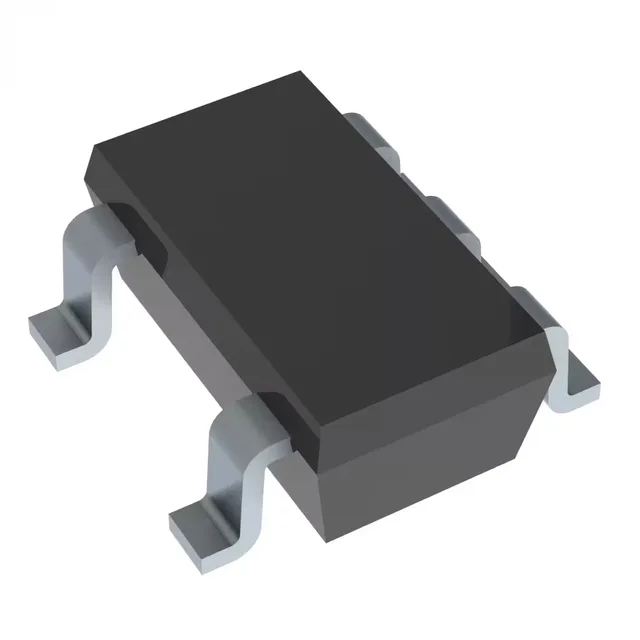
The TL331KDBVT: Listed as Active by the manufacturer. No NRND or LTB flags.
Wide supply, flexible output — what the ratings mean
The 700µA max quiescent current is modest; not the lowest-power option for battery gear, but fine for a motor drive or PLC input module where the comparator is always on. The 20mA typical output drive is enough to switch a small relay or LED directly, though for a logic input the sink current is usually under a milliamp. Input offset voltage max is 5mV at 30V, and input bias current max is 0.25µA at 5V. For a general-purpose differential comparator these are standard numbers — adequate for overvoltage detection, zero-crossing, or threshold sensing. If the design needs sub-millivolt precision, look at a precision comparator family instead.
Temperature range and package — fits industrial boards
The SOT-23-5 package (SC-74A, SOT-753) is a 5-pin surface-mount footprint, 2.9mm x 1.6mm typical. Single-element comparator in a tiny package; good for dense PCBs where board area is tight.