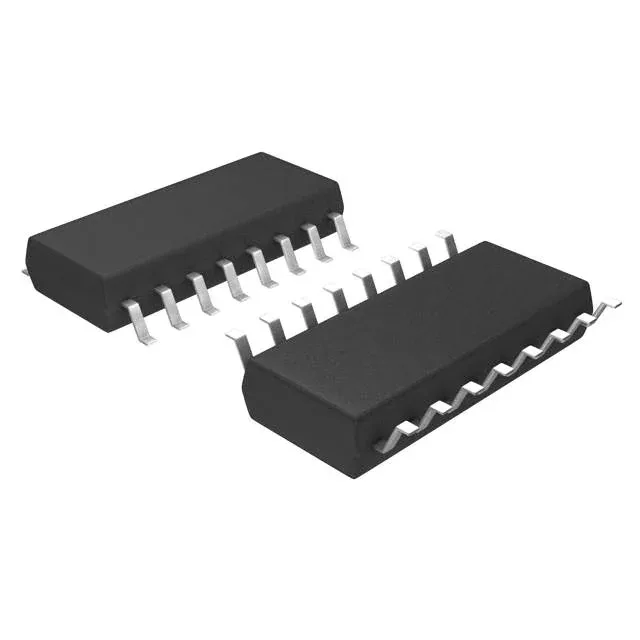
Dual-output PWM controller for multi-rail power supplies
The TL1451ACNSR is a PWM controller IC from Texas Instruments that handles step-up, step-down, and step-up/step-down conversion topologies — buck, boost, or flyback — from a single 3.6 V to 50 V supply rail. It drives two independent transistor-driver outputs, so one chip can regulate two separate voltage rails — say a 5 V logic rail and a 12 V analog rail — without a second controller. The switching frequency spans 1 kHz to 500 kHz, letting you trade inductor size against switching losses: lower frequencies use bigger magnetics but cut gate-drive loss; higher frequencies shrink the inductor at the cost of more heat in the FETs.
Wide input range and industrial temperature grade
Operating temperature from -20°C to 85°C (TA) fits most factory-floor and outdoor telecom enclosures; the -20°C low end covers cold-start conditions in unheated cabinets. No synchronous rectifier and no clock sync — the controller uses an external diode for the catch rectifier, which is standard for flyback and low-cost boost designs, and the free-running oscillator does not lock to an external clock.