30 pA input bias — the JFET advantage for high-impedance sources
Input bias current of 30 pA is the headline reason to pick this over a bipolar op-amp. It means negligible loading on a photodiode, a high-value resistor divider, or a piezo sensor — the signal sees the amplifier's impedance, not a current sink. The 3 mV input offset voltage is typical for a general-purpose JFET stage; if your application needs sub-millivolt precision, plan for a trim or a chopper-stabilized alternative.
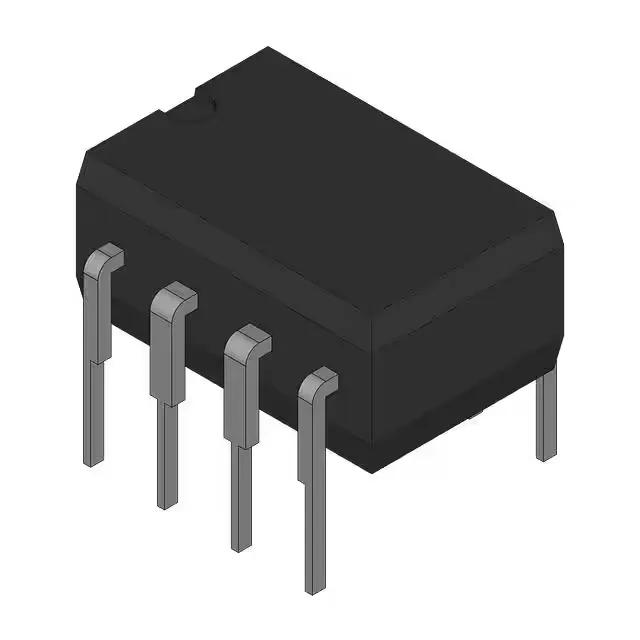
The TL061IP operates from a single or split supply spanning 7 V to 36 V. That covers common ±5 V, ±12 V, and ±15 V rails as well as single 9 V, 12 V, or 24 V industrial supplies. The 8-DIP (0.300" width) footprint is a standard through-hole layout, easy to socket or solder into prototype boards and legacy retrofits.
For BOM lines that need a through-hole JFET op-amp, this is a stable, long-term selection.