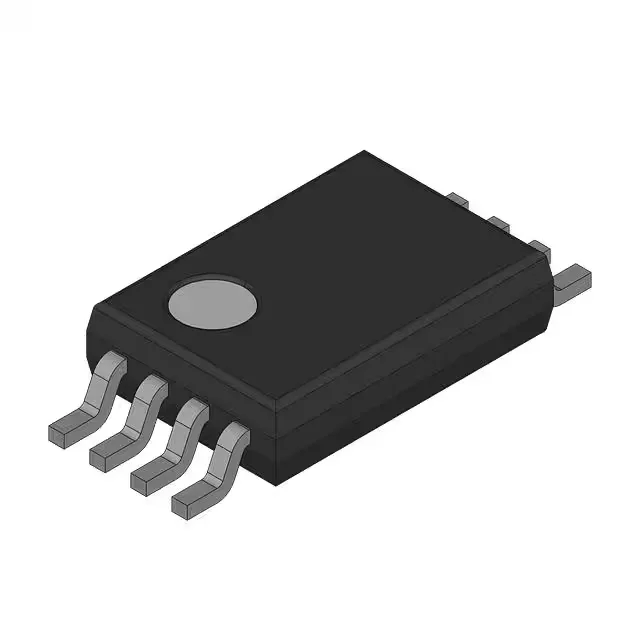
Texas Instruments THS4130IDGKR — Logic ICs

THS4130IDGKR Differential Op-Amp, 150 MHz, 52 V/µs

MPNTHS4130IDGKR
End of Life

Texas Instruments THS4130IDGKR fully differential amplifier, 150 MHz -3 dB bandwidth, 52 V/µs slew rate, 4 V to 33 V supply, single channel, 8-VSSOP package, -40°C to 85°C.

$5.21Ref. price · indicative, final on quote
Packaging8-TSSOP, 8-MSOP (0.118", 3.00mm Width)
StockContact for availability
MOQ1 pcs
  • 100% new & originalTraceable channels only — no refurbs, no pulls, no remarked parts.
  • Date & lot codes on quoteStated per line before you commit; label photos on request.
  • MSL-compliant ESD packingMoisture-sealed bags with indicator cards; reels photo-verified.
  • PayPal buyer protectionPay by T/T, PayPal or Payoneer — card payments covered end to end.

Specifications

THS4130IDGKR Technical Specifications
ParameterValue
Output typeDifferential
Mounting typeSurface Mount
Amplifier typeDifferential
Voltage - input offset200 µV
Voltage - supply span33 V
Current - supply12.3mA
Current - input bias2 µA
Current - output (Channel)85 mA
Operating temperature-40°C ~ 85°C
-3db bandwidth150 MHz
Gain bandwidth product225 MHz
PackageBulk
Slew rate52V/µs
Case8-TSSOP, 8-MSOP (0.118\", 3.00mm Width)
Number of circuits1

Product details

What this differential amplifier does on your board

The Texas Instruments THS4130IDGKR is a fully differential amplifier — it takes a single-ended or differential input and produces a balanced differential output. That makes it the natural driver for high-resolution SAR and pipeline ADCs, where a clean differential signal rejects common-mode noise and doubles the voltage swing into the converter. With a 150 MHz -3 dB bandwidth and a 52 V/µs slew rate, it can handle IF sampling in communications receivers, video distribution, or wideband instrumentation without introducing slew-rate distortion on fast edges. The single-channel device operates from a 4 V to 33 V supply span, so it works equally well on a 5 V single rail or ±15 V industrial supplies.

Dynamic specs that matter for signal integrity

The 52 V/µs slew rate is the headline number for driving capacitive loads like ADC inputs — it means the output can swing 5 V in under 100 ns, keeping the signal edge clean and avoiding the slew-induced nonlinearity that shows up as harmonic distortion in the digitised result. The 225 MHz gain-bandwidth product tells you the open-loop gain stays high well into the megahertz range, so closed-loop gain accuracy holds up at frequencies where slower amplifiers would start to droop. Input bias current is 2 µA, typical for a bipolar-input stage; that matters when your source impedance is high, because the bias current develops an offset voltage across the source resistance. The 200 µV input offset voltage is tight enough for most 12- to 14-bit signal chains without a trim.

The 4 V minimum supply means you can run this part from a single 5 V rail and still have headroom for the input and output stages. The 33 V maximum covers the full ±15 V industrial supply range, so it fits into existing ±15 V analog backplanes without a regulator change. Supply current is 12.3 mA typical — modest for a 150 MHz amplifier, but worth checking against your total power budget if you are running multiple channels. Each channel can deliver 85 mA of output current, enough to drive a 50 Ω back-terminated cable or a 100 Ω differential ADC input with plenty of margin.

Package and temperature grade for the build

The THS4130IDGKR comes in an 8-VSSOP package (the DGKR suffix), which is the same 3.00 mm × 3.00 mm footprint as the standard MSOP-8. It is a surface-mount part, so it reflows with the rest of the board.

Frequently asked questions

What is the bandwidth of THS4130IDGKR?

The -3 dB bandwidth is 150 MHz, and the gain-bandwidth product is 225 MHz. That combination supports signal chains up to the tens of megahertz with good closed-loop gain accuracy.

Can THS4130IDGKR be used in single-supply applications?

Yes. The supply voltage range is 4 V to 33 V, so a single 5 V or 12 V rail works. Just keep the input common-mode and output swing within the supply rails — the output is differential, not rail-to-rail, so leave headroom.