8 Mbps CAN FD for in-vehicle networks
The Texas Instruments TCAN1057AVDRBRQ1 is an automotive-grade CAN FD transceiver that pushes the bus data rate to 8 Mbps, a step up from the 1 Mbps ceiling of classic CAN 2.0. That speed matters when you are loading the network with over-the-air updates, multi-ECU diagnostic sessions, or high-resolution sensor data on a single twisted pair. It handles the faster arbitration and data phases of CAN FD without dropping frames, and the 115 mV receiver hysteresis keeps the bus immune to the kind of noise you get from a nearby ignition coil or a motor-drive PWM rail.
AEC-Q100 and 150°C junction — built for under-hood duty
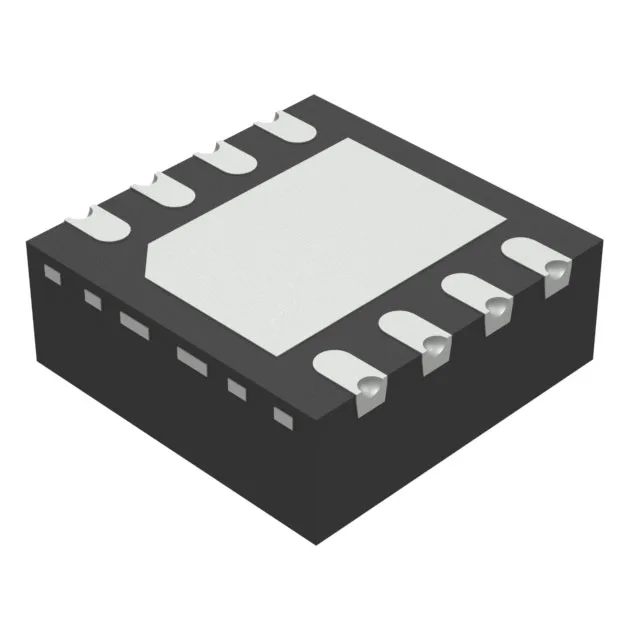
AEC-Q100 qualification is the baseline for any component going into an automotive ECU, and the TCAN1057AVDRBRQ1 carries it. The real differentiator is the 150°C operating junction temperature. Most CAN transceivers top out at 125°C, which is fine for cabin or chassis modules. This part stretches to 150°C, covering engine-bay ECUs, transmission controllers, or any module that sits near a heat source. The 8-VDFN with exposed pad and the 8-SON (3x3) package with wettable flanks means the solder joints are optically inspectable on the line — a production-floor requirement for automotive tier-1s.
That means the line is current, the wafer fab is running, and there is no end-of-life notice on the horizon.
Half-duplex, single driver/receiver — the standard CAN interface
The driver pulls the dominant bus level; the receiver reads the differential voltage on the CANH and CANL lines. Nothing exotic — it is the same pinout and logic as the TCAN1042 family, so a board designed for that device can take this part with a BOM swap. No special handling beyond the usual MSL precautions.