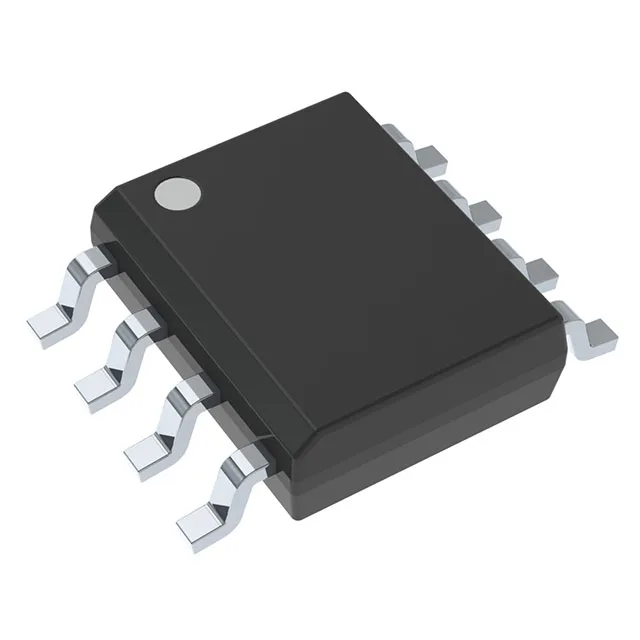
Automotive CAN transceiver with 150°C capability
It supports the CAN protocol at data rates up to 8 Mbps, making it suitable for both classic CAN and CAN FD networks. The part is AEC-Q100 qualified and operates over a -40°C to 150°C ambient temperature range, covering under-hood and engine-adjacent environments where standard industrial parts would derate or fail.
What the 8 Mbps and 115 mV hysteresis mean on the bus
The 8 Mbps data rate is the headline performance spec — this transceiver handles CAN FD (flexible data rate) frames without bit-rate limitations. For a design targeting higher throughput, this part avoids the bottleneck that 1 Mbps classic CAN parts introduce. The 115 mV receiver hysteresis provides built-in noise rejection on the differential bus lines, which is especially relevant in automotive environments with alternator whine, ignition noise, and long cable runs. The supply range of 4.5V to 5.5V confirms compatibility with standard 5V CAN bus systems; the 4.5V low end gives margin during cold-crank or brownout conditions.
The ROHS3 compliance is current and covers global regulatory requirements.
AEC-Q100 qualification — the OEM auditor's box is checked
The AEC-Q100 qualification is the automotive-grade baseline that procurement and quality teams need documented for PPAP submissions. The -40°C to 150°C operating range covers grade-0 applications (engine compartment, exhaust-adjacent) where the 125°C ceiling of a grade-1 part would be a violation.