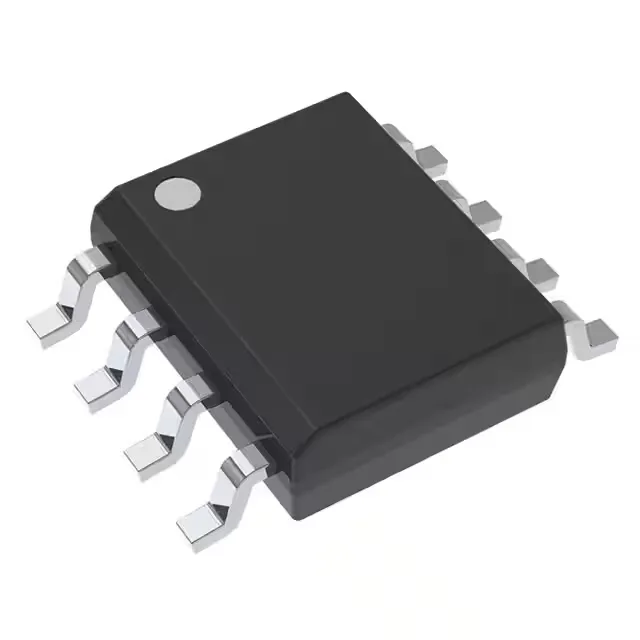
Texas Instruments TCAN1051VDQ1 — Interface & Transceivers

TCAN1051VDQ1 CAN Transceiver, AEC-Q100, 2 Mbps, 8-SOIC

MPNTCAN1051VDQ1
Active

Texas Instruments TCAN1051VDQ1, Automotive AEC-Q100, Half-Duplex CAN Transceiver, 2 Mbps Data Rate, 4.5V-5.5V Supply, -55°C to 125°C, 8-SOIC Package.

$1.5328Ref. price · indicative, final on quote
Independent supplier — new & surplus stockAuthenticity-screened · ESD-safe packingListing updated Aug 2026

Specifications

TCAN1051VDQ1 specifications
ParameterValue
TypeTransceiver
SeriesAutomotive, AEC-Q100
MountingSurface Mount
Supply voltage4.5V ~ 5.5V
ProtocolCANbus
Operating temperature-55°C~125°C
DuplexHalf
PackageTube
Data rate2Mbps
Case8-SOIC (0.154\", 3.90mm Width)
Receiver hysteresis120 mV
Number of drivers (Receivers)1/1

Product details

Automotive CAN transceiver with 2 Mbps support and wide temperature range

Receiver hysteresis is specified at 120 mV, giving the bus interface clean noise rejection on long or electrically noisy cable runs.

Package and footprint — standard 8-SOIC, surface-mount

No special thermal pad or via pattern is required — standard SOIC-8 land pattern works.

Single driver/receiver pair — half-duplex CAN bus interface

Half-duplex operation means the bus alternates between transmit and receive — the dominant state on the bus is driven by the TXD input, and the RXD output reflects the bus state. The 120 mV receiver hysteresis ensures the digital output doesn't chatter on a marginal bus signal.

Frequently asked questions

Is TCAN1051VDQ1 automotive qualified?

Yes, the TCAN1051VDQ1 is part of the Automotive, AEC-Q100 series, meaning it has been qualified to the AEC-Q100 stress test standard for automotive-grade ICs.

What is the difference between TCAN1051VDQ1 and TCAN1051DRQ1?

For exact pin compatibility, check the package drawings — the VDQ1 is a standard 8-SOIC.

Is TCAN1051VDQ1 suitable for 12V automotive systems?

Yes, it is suitable. The CAN bus pins are designed to handle the common-mode voltage range of a 12 V system, and the AEC-Q100 qualification ensures it meets automotive reliability requirements.