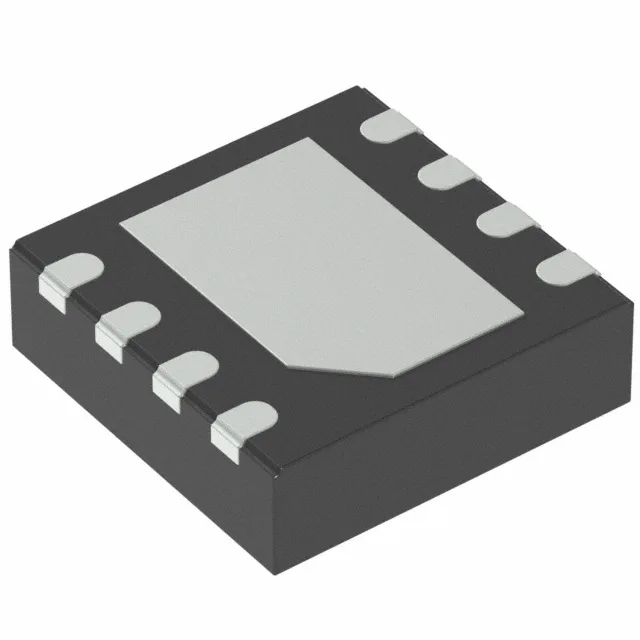
Texas Instruments TCAN1051HGVDRBRQ1 — Logic ICs

TCAN1051HGVDRBRQ1 CAN Transceiver, 5 Mbps, AEC-Q100, 8-VSON

MPNTCAN1051HGVDRBRQ1
Active

Texas Instruments TCAN1051HGVDRBRQ1, Automotive AEC-Q100, Half-Duplex CANbus Transceiver, 5Mbps, 4.5V~5.5V, -55°C~125°C, 8-VSON (3x3) package.

$0.9405Ref. price · indicative, final on quote
Independent supplier — new & surplus stockAuthenticity-screened · ESD-safe packingListing updated Jul 2026

Specifications

TCAN1051HGVDRBRQ1 specifications
ParameterValue
TypeTransceiver
SeriesAutomotive, AEC-Q100
MountingSurface Mount, Wettable Flank
Supply voltage4.5V ~ 5.5V
ProtocolCANbus
Operating temperature-55°C~125°C
DuplexHalf
PackageTape & Reel (TR)
Data rate5Mbps
Case8-VDFN Exposed Pad
Receiver hysteresis120 mV
Number of drivers (Receivers)1/1

Product details

CAN FD-ready transceiver for 5 V automotive buses

The device integrates a 120 mV receiver hysteresis for noise immunity on long bus lines and comes in a wettable-flank 8-VSON package (3x3 mm) that supports automated optical inspection (AOI) after reflow.

Standard CAN 2.0 tops out at 1 Mbps; the 5 Mbps rating on this part explicitly supports CAN FD frames, where the data phase runs faster than the arbitration phase. If your design targets a CAN FD network — common in newer automotive gateways, ADAS modules, and high-throughput sensor clusters — this transceiver handles the payload acceleration without dropping back to legacy arbitration speeds. The half-duplex line is typical for CAN; the single driver/receiver pair (1/1) matches the standard bus topology.

The wettable flank allows side-wetting inspection, which is a requirement for many automotive assembly lines that mandate AOI on QFN-style packages.

Frequently asked questions

Is TCAN1051HGVDRBRQ1 compatible with CAN FD?

Yes, the 5 Mbps data rate rating explicitly supports CAN FD frames. The transceiver can handle the faster data phase of CAN FD while maintaining backward compatibility with CAN 2.0 arbitration.

Is TCAN1051HGVDRBRQ1 obsolete or going EOL?

No. There is no NRND or EOL notification, so it remains a stable choice for production.