AEC-Q100 grade 0 at 125°C — the qualification envelope
The OEM auditor will ask for the PPAP — this part carries the grade to support it. Half-duplex CAN protocol at 5 Mbps supports CAN FD (flexible data rate) frames, giving you the higher payload per arbitration cycle compared to classical CAN at 1 Mbps. The 120 mV receiver hysteresis provides built-in noise margin on the differential bus, which matters when the harness runs near ignition coils or motor drives.
5 Mbps CAN FD — bus throughput for modern architectures
At 5 Mbps, this transceiver handles CAN FD data phase at full speed, so a gateway or ECU can burst diagnostic or firmware-update payloads without waiting for arbitration overhead. The supply range of 4.5V to 5.5V matches the standard 5V automotive rail, with enough margin for a 500 mV drop on the supply line during cranking.
Listed as Active with a current lifecycle stage.
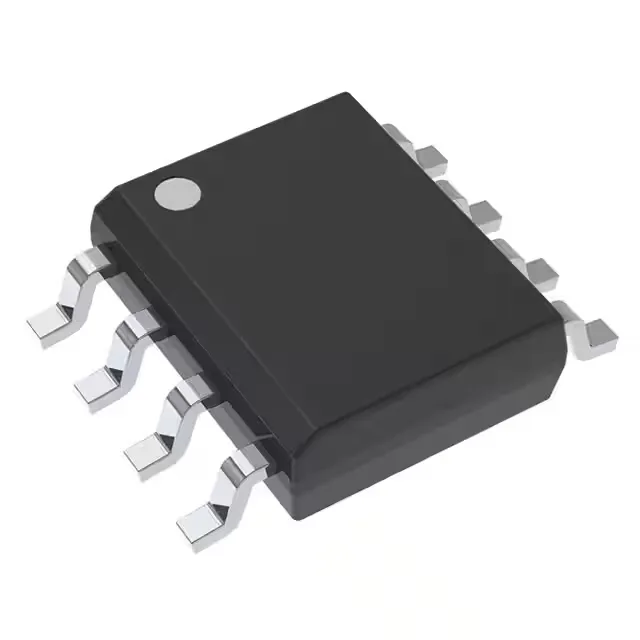
SOIC-8 footprint — direct fit on standard CAN node layouts
Housed in an 8-SOIC (0.154", 3.90mm Width) surface-mount package, supplier device package 8-SOIC. The pinout matches the industry-standard CAN transceiver footprint used by TCAN1042, SN65HVD230, and others — no board spin required when swapping between these families.