It handles the CAN protocol at data rates up to 2 Mbps, supporting both classical CAN and CAN FD (flexible data rate) frames. The receiver hysteresis of 120 mV provides noise immunity on the bus, which matters when the cable runs through a noisy engine bay or factory floor.
Supply voltage and bus compatibility
It is not a 3.3 V device on the supply side, so if your microcontroller runs at 3.3 V you will need level translation on the digital interface pins (TXD, RXD) or choose a 3.3 V-tolerant CAN transceiver variant. The single driver and single receiver pair (1/1) is the typical CAN node configuration.
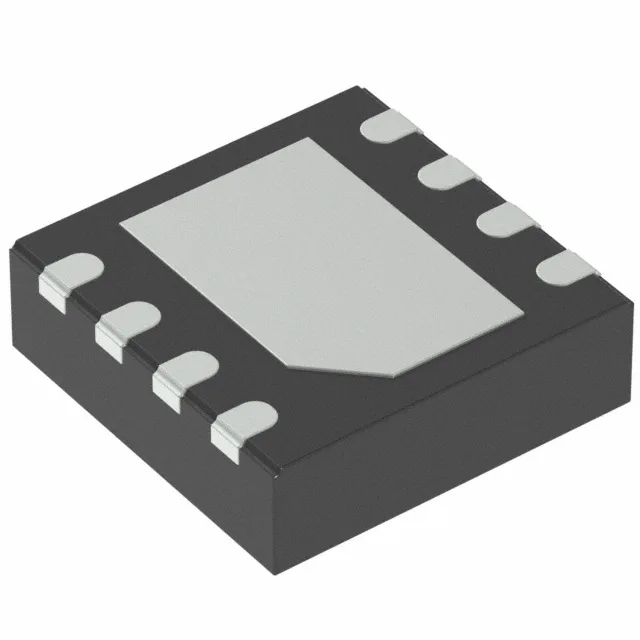
Housed in an 8-VDFN exposed-pad package (8-VSON 3x3 mm), the TCAN1051HDRBTQ1 uses a wettable flank terminal finish. This is a design choice for automated optical inspection (AOI) after reflow — the side solder fillet is visible, which helps in high-reliability production lines.
For a BOM destined for a passenger vehicle ECU or a 24/7 industrial controller, this grade removes the need for a separate derating analysis.