5 Mbps CAN FD ready — what the data rate means on the bus
This is a 5 Mbps CAN transceiver, which puts it in the CAN FD (flexible data-rate) class. The 5 Mbps figure is the maximum signaling rate on the bus, not the controller's bit rate — it means the physical layer can handle the faster arbitration and data phases that CAN FD requires. If your design uses a CAN FD controller, this transceiver will not be the bottleneck. The 120 mV receiver hysteresis gives you clean edge detection on a noisy bus, which matters in automotive environments where the common-mode voltage swings with the alternator and ignition noise.
If you are designing for passenger vehicles, commercial trucks, or off-highway equipment that sees the full temperature span, this grade covers it.
8-VSON package with wettable flank — inspection-friendly
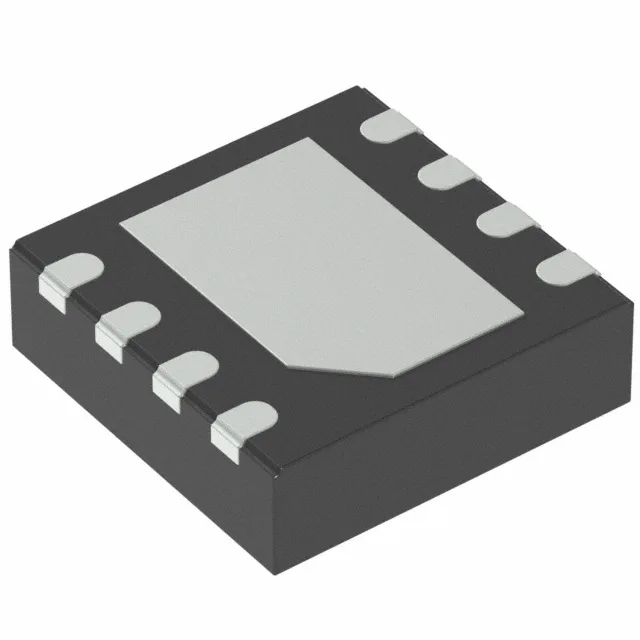
The 8-VSON (3x3 mm) package with wettable flank terminals is a small-footprint, surface-mount package. The wettable flank means the side of the terminal is exposed after soldering, so automated optical inspection (AOI) can verify the solder joint — a requirement for many automotive assembly lines. The exposed pad underneath helps with thermal dissipation if the transceiver is running continuous traffic near the maximum data rate. The supply voltage range is 4.5V to 5.5V, so a standard 5V automotive rail works directly.
Half-duplex, single driver/receiver — the standard CAN topology
This is a half-duplex transceiver with one driver and one receiver. That is the standard CAN bus topology: the bus is shared, only one node talks at a time, and the receiver listens for the dominant/ recessive bit arbitration. The single-channel 1/1 driver/receiver count is what you expect for a basic CAN node — no extra channels, no multiplexing. The protocol is CANbus, so it works with CAN 2.0 and CAN FD controllers that output the standard TXD/RXD signals.