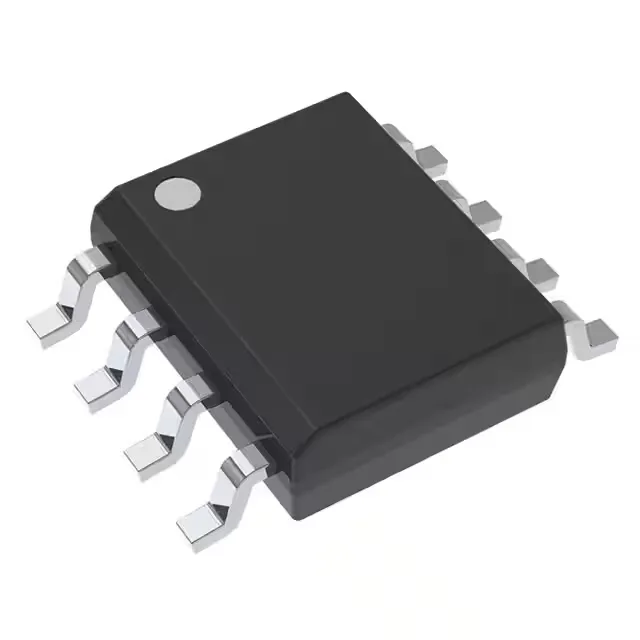
CAN FD-ready transceiver for 5V automotive and industrial buses
In a typical CAN node, the TCAN1051G sits between the CAN controller's TXD/RXD pins and the physical twisted-pair bus, converting logic-level signals to the differential dominant/recessive bus states with the 120 mV receiver hysteresis that provides noise immunity on the shared line.
The single 1/1 driver/receiver pair means this transceiver handles one CAN node per package. The 5 Mbps data rate is the headline parameter: standard CAN tops out at 1 Mbps, so the TCAN1051G is the part you pick when the design must carry CAN FD frames without changing the physical-layer footprint.
For the procurement desk, this means the part remains a safe BOM line for new production builds and ongoing series supply. No official successor has been published, which is normal for a current-generation CAN FD transceiver that is still in volume production.
5V supply—not a 3.3V-logic part
The supply range is 4.5V to 5.5V nominal, so the VCC pin expects a regulated 5V rail. If the CAN controller on the other end of TXD/RXD runs at 3.3V logic, a level translator or a separate 5V supply for the transceiver is required—the TCAN1051G does not support 3.3V VCC. The receiver hysteresis of 120 mV is a standard value for CAN transceivers; it prevents the bus from triggering on common-mode noise without adding external filtering components.