High-speed CAN physical layer for 5 V automotive buses
It handles a data rate of 8 Mbps, which puts it in the CAN FD (flexible data-rate) class, while staying compatible with legacy CAN 2.0 nodes on the same bus.
AEC-Q100 and 150°C junction rating — designed for under-hood duty
That 150°C TJ rating is the ceiling for under-hood and transmission-mounted ECUs where ambient temperatures regularly exceed 125°C.
SOT-23-8 footprint — board-area trade-off
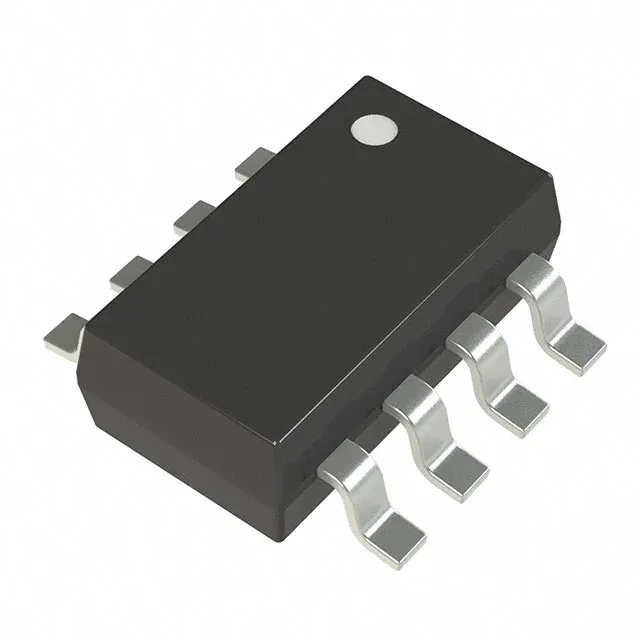
The TCAN1044AVDDFRQ1 comes in a SOT-23-8 package (also designated TSOT-23-8). That is a small, low-profile surface-mount package that saves board space compared to the traditional SOIC-8 footprint used on older CAN transceivers. The trade-off is that the SOT-23-8 has a higher thermal resistance than SOIC-8, so the 150°C junction rating becomes the practical limit — keep the ambient temperature and self-heating within the SOA. For a typical 5 V, 50 mA load the junction rise is modest, but if you are driving a heavily loaded bus or operating near 150°C ambient, a quick thermal check is warranted.
The TCAN1044AVDDFRQ1 is listed with an active product status. For a production BOM line, this part does not carry the obsolescence risk that legacy 1 Mbps CAN transceivers (like the SN65HVD230 or TJA1050) now face.