The 5 Mbps rating is the headline — this part supports CAN FD (flexible data-rate) frames, not just classic 1 Mbps CAN 2.0. If the design uses CAN FD for faster firmware updates or higher-throughput sensor data, this part handles it without a bus-speed bottleneck. The supply range is 4.5V to 5.5V, which means it expects a 5V rail. It does not run from a 3.3V supply directly — the VIO pin on some family variants handles logic-level translation, but this base part needs a 5V bus supply and the controller-side logic levels follow the VCC rail.
AEC-Q100 Grade 0 temperature range — underhood and beyond
This qualifies the part for underhood environments, engine bay, and any location where the ambient hits 125°C. The -55°C low end also covers cold-crank and arctic storage conditions without qualification gaps. AEC-Q100 qualification is listed explicitly in the series field. For an OEM auditor reviewing the PPAP file, that entry confirms the part went through the full automotive stress test flow — not just an industrial part marketed as 'automotive-capable'. Grade 0 is the strictest tier; this part meets it.
There is no NRND notice, no last-time-buy window, and no announced end-of-life. For a production program that expects to run for several years, this part does not carry an obsolescence-driven respin risk today.
Package and footprint — the wettable flank detail
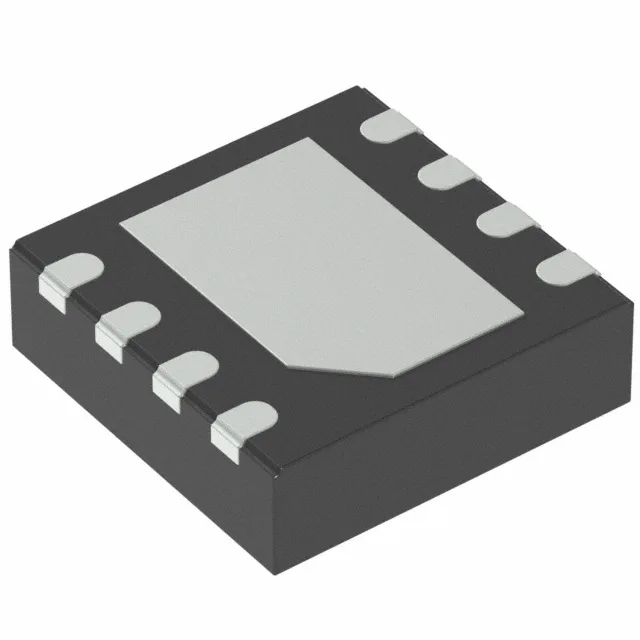
The 8-VSON (3x3) package with an exposed pad and wettable flank is designed for automated optical inspection (AOI). The wettable flank means the side of the package has a solderable surface, so the solder joint is visible from the side after reflow — critical for automotive assembly lines that inspect every joint.