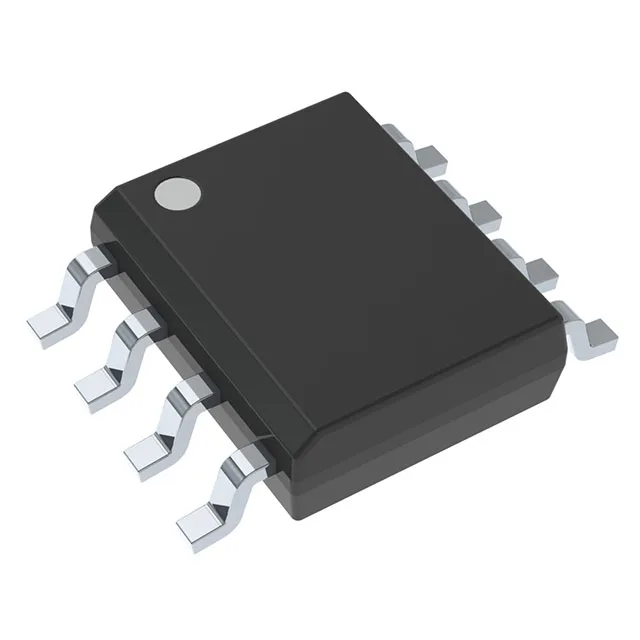
Texas Instruments TCAN1042HDRBTQ1 — Interface & Transceivers

TCAN1042HDRBTQ1 CAN Transceiver, 5 Mbps, AEC-Q100, 8-SOIC

MPNTCAN1042HDRBTQ1
Active

Texas Instruments TCAN1042HDRBTQ1, Automotive CAN FD Transceiver, 5 Mbps, 1/1 Driver/Receiver, 4.5V–5.5V Supply, -55°C to 125°C, AEC-Q100, 8-SOIC.

$2.1500Ref. price · indicative, final on quote
Packaging8-SOIC (0.154", 3.90mm Width)
RoHSROHS3 Compliant
Independent supplier — new & surplus stockAuthenticity-screened · ESD-safe packingListing updated Aug 2026

Specifications

TCAN1042HDRBTQ1 specifications
ParameterValue
TypeTransceiver
MountingSurface Mount
Supply voltage4.5V ~ 5.5V
ProtocolCANbus
Operating temperature-55°C ~ 125°C
GradeAutomotive
PackageTape & Reel (TR) Cut Tape (CT)
Data rate5Mbps
QualificationAEC-Q100
Case8-SOIC (0.154\", 3.90mm Width)
Number of drivers (Receivers)1/1

Product details

The 5 Mbps data rate is the key differentiator from classic CAN (ISO 11898-2) transceivers that top out at 1 Mbps. In a CAN FD network, the arbitration phase runs at the legacy rate while the data phase switches to the higher bit rate. This part handles that data-phase acceleration without retiming, so a design moving from 1 Mbps CAN to CAN FD gets a five-times payload throughput improvement on the same twisted-pair physical layer.

The base product number TCAN1042 covers multiple speed and feature variants; the HDRBTQ1 suffix identifies this specific 5 Mbps, tape-and-reel, 8-SOIC ordering code.

Frequently asked questions

Is TCAN1042HDRBTQ1 AEC-Q100 qualified?

Yes, the TCAN1042HDRBTQ1 is AEC-Q100 qualified, meeting the automotive reliability standard for stress qualification.

What is the closest pin-compatible alternative to TCAN1042HDRBTQ1?

Within the TCAN1042 family, the base TCAN1042 (non-HD variant) is pin-compatible but limited to 1 Mbps classic CAN rather than 5 Mbps CAN FD. For a true CAN FD drop-in, the TCAN1042V adds a VIO supply pin for 1.8 V/3.3 V logic interface — verify the pinout before substitution, as the VIO pin changes the pin assignment.