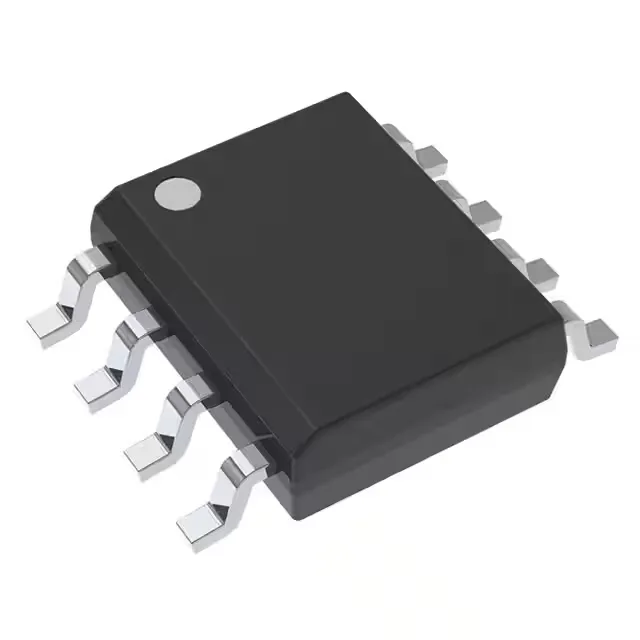
What this CAN transceiver is and where it goes
It handles the physical-layer conversion between the CAN protocol controller's logic-level signals and the differential bus lines (CANH, CANL). The part is AEC-Q100 qualified and rated over the full -55 to 125 °C military-automotive temperature range, making it a fit for under-hood engine control units, body electronics, and industrial equipment that sees wide thermal swings.
5 Mbps and the CAN FD bus
The headline 5 Mbps data rate supports CAN FD operation, where the arbitration phase runs at the standard 500 kbps or 1 Mbps and the data phase switches to the higher rate. That means the transceiver must handle the faster edge rates without excessive ringing or EMI. The TCAN1042DQ1 is specified for this, so it can be used in gateway modules or sensor clusters that need the higher payload throughput. If your design only uses Classical CAN at 500 kbps, the 5 Mbps rating still gives margin on the signal-integrity budget.
AEC-Q100 and the temperature envelope
The -55 °C low end covers cold-crank conditions and arctic storage, while the 125 °C high end handles under-hood heat soak. For industrial buyers, this same temperature grade covers motor-drive cabinets and outdoor telecom enclosures without needing a separate industrial-rated variant.
That makes the TCAN1042DQ1 a drop-in candidate for board revisions that need the higher data rate or the wider temperature range.