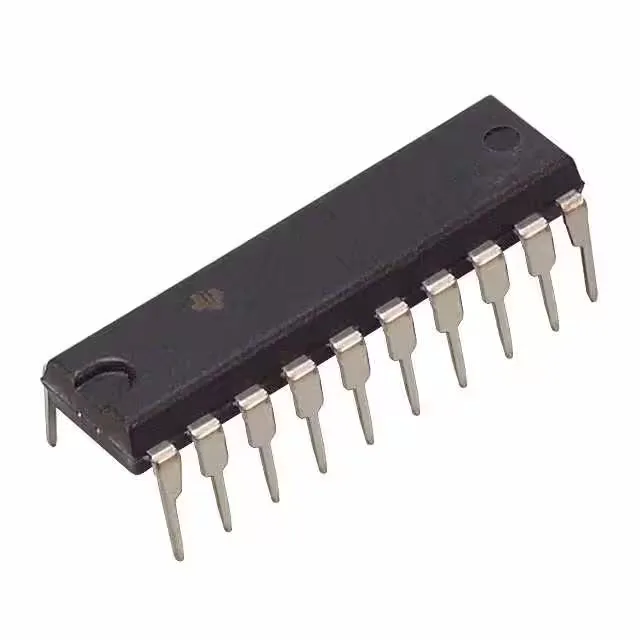
Texas Instruments SN74S374N — Logic ICs

SN74S374N D-Type Flip-Flop, 8-Bit, 100 MHz, 20-DIP

MPNSN74S374N
End of Life

TI SN74S374N, 74S series, D-Type flip-flop, 8-bit, positive-edge triggered, tri-state non-inverted outputs, 100 MHz clock, 4.75V–5.25V supply, 17ns propagation delay @5V/15pF, 0°C–70°C, 20-DIP through-hole.

$4.3Ref. price · indicative, final on quote
Packaging20-DIP (0.300", 7.62mm)
RoHSROHS3 Compliant
Series74S
Independent supplier — new & surplus stockAuthenticity-screened · ESD-safe packingListing updated Aug 2026

Specifications

SN74S374N specifications
ParameterValue
TypeD-Type
Series74S
Output typeTri-State, Non-Inverted
Trigger typePositive Edge
MountingThrough Hole
Supply voltage4.75V ~ 5.25V
Current - quiescent110 mA
Current - output high, low6.5mA, -
Clock frequency100 MHz
Operating temperature0°C ~ 70°C (TA)
PackageTube
FunctionStandard
Case20-DIP (0.300\", 7.62mm)
Number of elements1
Number of bits per element8
Max propagation delay @ v, max CL17ns @ 5V, 15pF

Product details

8-bit D-type register with tri-state bus drive

The SN74S374N is an 8-bit D-type flip-flop from TI's 74S Schottky family. It captures data on the positive edge of the clock and presents it on tri-state, non-inverted outputs — meaning the outputs can be driven high, low, or placed in a high-impedance state for bus sharing. The 100 MHz clock frequency and 17 ns propagation delay (at 5 V, 15 pF) make it a fit for moderate-speed address/data latching in 5 V TTL systems. It is a through-hole part in a 20-pin DIP (0.300" body), so it goes into socketed boards or prototype builds, not a reflow line.

Supply and temperature — the operating envelope

Output drive and quiescent current

Each output can source 6.5 mA (IOH) — enough to drive one or two standard TTL loads or a low-power LED indicator, but not a heavy bus without a buffer. The quiescent supply current (Iq) sits at 110 mA, which is typical for a Schottky 8-bit register and means the part draws that current even when idle. For battery-powered or thermally constrained boards, the 74LS or 74HC families draw significantly less standby current.

Frequently asked questions

What is the difference between the SN74S374N and the SN74LS374N?

The SN74LS374N is the low-power Schottky (74LS) equivalent. It runs at a lower 40 MHz clock frequency versus 100 MHz for the SN74S374N, has a longer 27 ns propagation delay (at 5 V, 15 pF), and draws significantly less quiescent current (22 mA typical vs 110 mA). Both are 8-bit D-type flip-flops with tri-state outputs in the same 20-pin DIP footprint, so they are pin-compatible. The choice depends on whether you need the speed of the 74S or the lower power of the 74LS.

What is the SN74S374N used for?

It is an 8-bit D-type register used for data latching, address buffering, and bus interfacing in 5 V TTL logic systems. Typical applications include microprocessor address/data bus demultiplexing, I/O port expansion, and register storage in controlled-environment equipment.