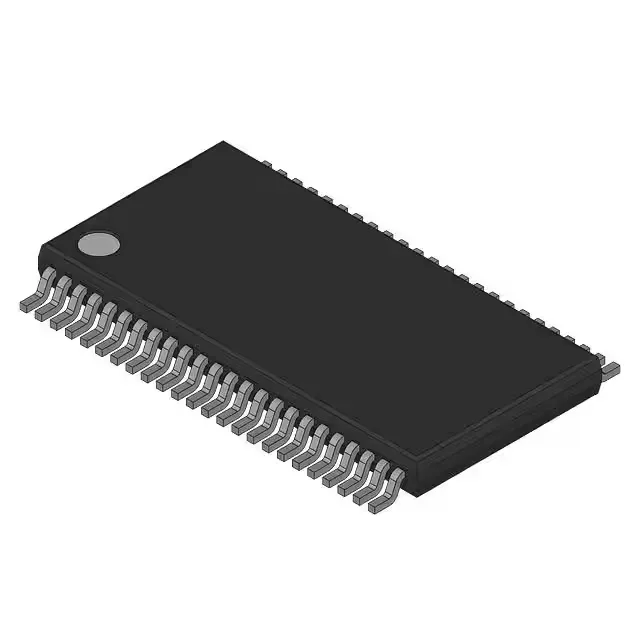
Texas Instruments SN74LVT162240DGG — Logic ICs

SN74LVT162240DGG 74LVT 4-bit Inverting Buffer, 3-State

MPNSN74LVT162240DGG
End of Life

Texas Instruments 74LVT series, SN74LVT162240DGG, Buffer, Inverting, 4-Element, 4-Bit per Element, 3-State Output, 2.7V to 3.6V Supply, -40°C to 85°C, Surface Mount 48-TFSOP (0.240", 6.10mm Width) / 48-TSSOP.

$0.57Ref. price · indicative, final on quote
Packaging48-TFSOP (0.240", 6.10mm Width)
RoHSROHS3 Compliant
Series74LVT
Independent supplier — new & surplus stockAuthenticity-screened · ESD-safe packingListing updated Aug 2026

Specifications

SN74LVT162240DGG specifications
ParameterValue
Series74LVT
Logic typeBuffer, Inverting
Output type3-State
MountingSurface Mount
Supply voltage2.7V ~ 3.6V
Current - output high, low12mA, 12mA
Operating temperature-40°C ~ 85°C (TA)
PackageBulk
Case48-TFSOP (0.240\", 6.10mm Width)
Number of elements4
Number of bits per element4

Product details

4-bit inverting buffer — bus interface workhorse

The Texas Instruments SN74LVT162240DGG is a 4-element, 4-bit-per-element inverting buffer with 3-state outputs from the 74LVT logic family. It sits between a bus master and a shared data or address bus, providing signal buffering and isolation. Each of the four elements handles four bits independently, and the 3-state outputs let multiple drivers share the same bus lines without contention. The part operates from a 2.7V to 3.6V supply, matching 3.3V logic rails common in telecom, industrial control, and networking equipment.

12 mA drive — enough for a loaded backplane?

The output drive is rated 12 mA source and 12 mA sink per pin.

It is not qualified to AEC-Q100, so for under-hood automotive use you would look at the 74LVC or 74AHCT automotive-grade variants.

Package: 48-TFSOP / 48-TSSOP

Supplied in a 48-lead TFSOP (0.240", 6.10 mm width) body, also referred to as TSSOP.

The part is ROHS3 compliant.

Frequently asked questions

What voltage does SN74LVT162240DGG use?

The supply voltage range is 2.7V to 3.6V, making it a native 3.3V logic part. It is not 5V-tolerant on the inputs or outputs.

What is the difference between 74LVT and 74LVC?

74LVT is a BiCMOS family optimised for higher output drive (typically 12–24 mA) and lower propagation delay at 3.3V, while 74LVC is a pure CMOS family with wider supply range (1.65V to 5.5V) and lower quiescent current. 74LVC parts are more common for battery-powered or mixed-voltage designs; 74LVT is preferred for heavily loaded 3.3V buses where drive strength matters more than standby power.

Is SN74LVT162240DGG a direct replacement for SN74LVTH162240?

The SN74LVTH162240 is a similar 16-bit inverting buffer with 3-state outputs, but it belongs to the 74LVTH family which includes bus-hold circuitry on the inputs. The SN74LVT162240DGG does not have bus-hold. If your design relies on bus-hold to maintain a valid logic level when the bus is undriven, the LVTH variant is the correct part. Otherwise, the LVTH and LVT parts are functionally interchangeable in most bus-buffer applications.