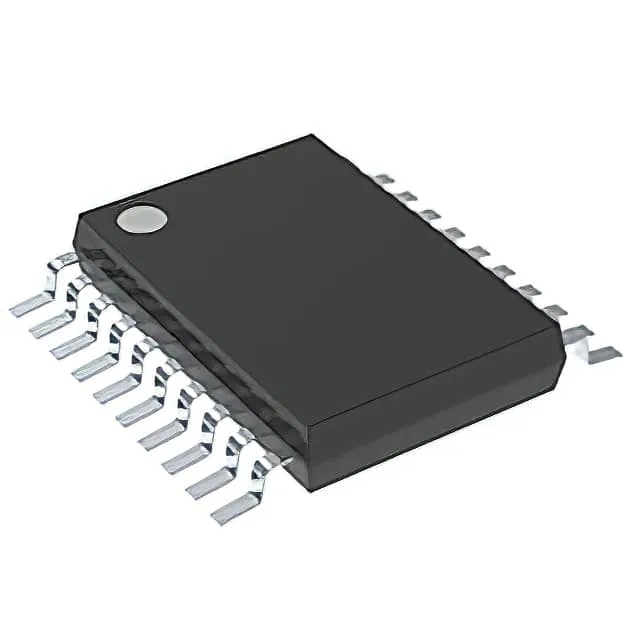
Texas Instruments SN74LVC374APWT — Discrete Semiconductors

SN74LVC374APWT Texas Instruments D-Type Flip-Flop, 20-TSSOP

MPNSN74LVC374APWT
End of Life

Texas Instruments 74LVC series D-Type flip-flop, SN74LVC374APWT, 8-bit, positive-edge triggered, tri-state non-inverted outputs, 20-TSSOP package, 100 MHz clock frequency, 1.65-3.6V supply.

$1.47Ref. price · indicative, final on quote
Packaging20-TSSOP (0.173", 4.40mm Width)
RoHSROHS3 Compliant
Series74LVC
Sourced new & surplus through independent channelsAuthenticity-screened · ESD-safe packingListing updated Aug 2026

Specifications

SN74LVC374APWT specifications
ParameterValue
TypeD-Type
Series74LVC
Output typeTri-State, Non-Inverted
Trigger typePositive Edge
MountingSurface Mount
Voltage1.65V ~ 3.6V
Current - quiescent10 µA
Current - output high, low24mA, 24mA
Frequency100 MHz
Operating temperature-40°C ~ 85°C (TA)
PackageTape & Reel (TR); Cut Tape (CT)
FunctionStandard
Case20-TSSOP (0.173\", 4.40mm Width)
Input capacitance4 pF
Number of elements1
Number of bits per element8
Max propagation delay @ v, max CL7ns @ 3.3V, 50pF

Product details

What this 8-bit D-type flip-flop does on the board

The SN74LVC374APWT is an 8-bit D-type flip-flop from TI's 74LVC logic family, in a 20-pin TSSOP package. It captures data on the positive edge of the clock and presents it at the outputs, with a tri-state control that lets you float the bus when the output-enable pin is high. This makes it a standard choice for registered data buses, address latches, and general-purpose storage in low-voltage digital systems.

Supply range and timing margins

The 7 ns max propagation delay at 3.3 V into a 50 pF load means the data settles well within a 100 MHz clock period, leaving margin for clock skew and trace delay. The 100 MHz clock frequency ceiling is the toggle rate of the flip-flop itself, not the bus — the actual data rate depends on the setup/hold timing of the driving and receiving devices.

The 4 pF input capacitance is low enough that the clock line sees minimal loading even with eight flip-flops on the same net.

Temperature range and where it works

The quiescent current is only 10 µA, which matters for battery-backed or always-on rails where every microamp counts.

It is sourced through authorized and independent distribution; lead time and pricing are confirmed at RFQ against the BOM quantity.

Frequently asked questions

Will SN74LVC374APWT drop into a board designed for SN74LVC574APWT?

Not without a layout change. Both are 20-pin TSSOP with the same supply and ground pins, but the 574 has a different pinout — the output-enable and clock functions are on different pins. The 574 also includes a flip-flop with a higher 150 MHz clock ceiling and slightly faster 6.8 ns propagation delay. They are functionally similar but not pin-compatible; a board spin is required to swap them.

What compliance documentation does Texas Instruments provide for this part?

The part is ROHS3 compliant per TI's lifecycle data. Standard documentation includes the datasheet, application notes for the 74LVC family, and RoHS/REACH declarations. No UL or IEC certification is listed for this logic IC.