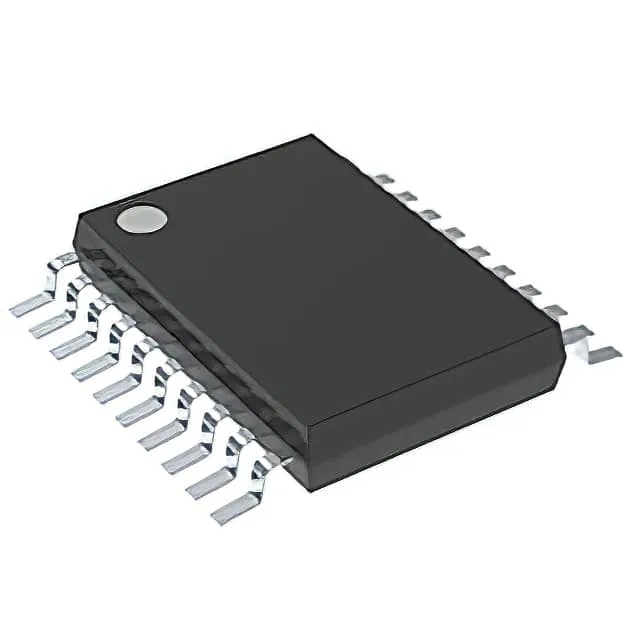
Texas Instruments SN74LVC244APWR — Memory (DRAM / SRAM / Flash / EEPROM)

SN74LVC244APWR Buffer, Non-Inverting, 1.65V–3.6V, 24mA

MPNSN74LVC244APWR
End of Life

Texas Instruments 74LVC series, Buffer, Non-Inverting, 3-State output, 1.65V ~ 3.6V supply, 2 elements x 4 bits, 24mA output current, -40°C ~ 125°C, Surface Mount 20-TSSOP.

$0.54Ref. price · indicative, final on quote
Packaging20-TSSOP (0.173", 4.40mm Width)
RoHSROHS3 Compliant
Series74LVC
Independent supplier — new & surplus stockAuthenticity-screened · ESD-safe packingListing updated Aug 2026

Specifications

SN74LVC244APWR specifications
ParameterValue
Series74LVC
Logic typeBuffer, Non-Inverting
Output type3-State
MountingSurface Mount
Supply voltage1.65V ~ 3.6V
Current - output high, low24mA, 24mA
Operating temperature-40°C ~ 125°C (TA)
PackageTape & Reel (TR); Cut Tape (CT)
Case20-TSSOP (0.173\", 4.40mm Width)
Number of elements2
Number of bits per element4

Product details

What this octal buffer does on your board

The Texas Instruments SN74LVC244APWR is a non-inverting octal buffer with 3-state outputs, organized as two 4-bit elements. It sits between a bus and a load when you need to isolate, drive, or disable a data path without inverting the signal. The 3-state outputs let multiple drivers share the same bus — pull the output-enable pins high and the outputs go high-impedance, releasing the bus. The 24 mA symmetrical source and sink drive is enough for typical point-to-point traces and short backplane stubs.

Frequently asked questions

Is SN74LVC244APWR 3.3 V compatible?

Yes. The supply range covers 3.3 V nominal, and the logic levels are LVCMOS-compatible at that voltage.

What is the difference between SN74LVC244A and SN74LVC244?

The 'A' suffix indicates an improved revision with tighter propagation delay and wider supply range. The SN74LVC244APWR is the current-production 'A' version.

Is SN74LVC244APWR 5 V tolerant?

No. The absolute maximum input voltage is tied to VCC plus a small margin; do not exceed the supply range. For 5 V logic, use a 5 V-tolerant buffer or a level translator.