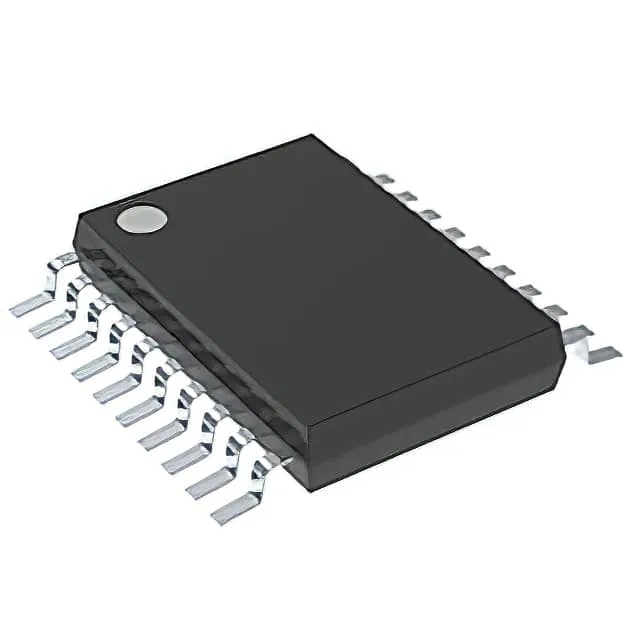
Texas Instruments SN74LVC2244APW — Discrete Semiconductors

SN74LVC2244APW Texas Instruments Buffer, 1.65-3.6V

MPNSN74LVC2244APW
End of Life

Texas Instruments 74LVC series buffer, non-inverting, SN74LVC2244APW, 20-TSSOP, 1.65V-3.6V supply, 12mA output, 3-state outputs.

$1.51Ref. price · indicative, final on quote
Packaging20-TSSOP (0.173", 4.40mm Width)
RoHSROHS3 Compliant
Series74LVC
Sourced new & surplus through independent channelsAuthenticity-screened · ESD-safe packingListing updated Aug 2026

Specifications

SN74LVC2244APW specifications
ParameterValue
Series74LVC
Logic typeBuffer, Non-Inverting
Output type3-State
MountingSurface Mount
Voltage1.65V ~ 3.6V
Current - output high, low12mA, 12mA
Operating temperature-40°C ~ 85°C (TA)
PackageTube
Case20-TSSOP (0.173\", 4.40mm Width)
Number of elements2
Number of bits per element4

Product details

Active production, 1.65-3.6V octal buffer

The SN74LVC2244APW: The 12mA source and sink capability per output is enough to drive a standard CMOS load or a short trace on a mixed-voltage backplane, but not a 50-ohm terminated line — that would need a higher-drive part like the 74ABT family.

Two-element, 4-bit per element organization

Internally, the device has two independent buffer elements, each handling four bits. This 2 × 4 arrangement is useful for splitting a byte-wide bus into two separate enable domains — for example, gating the upper and lower nibble of a data port independently. The 3-state output control lets each element be placed in high-impedance, so multiple buffers can share a bus without contention. The non-inverting path means the output polarity matches the input — no logic inversion to account for in the firmware.

20-TSSOP package and board integration

The 0.65 mm pitch is routable on a two-layer board with 6/6 mil trace/space rules. For 125°C ambient, the automotive-grade 74LVC parts (AEC-Q100) are the correct choice.

Frequently asked questions

How many channels does SN74LVC2244APW have?

It has two buffer elements, each handling four bits, for a total of eight non-inverting channels with 3-state outputs.