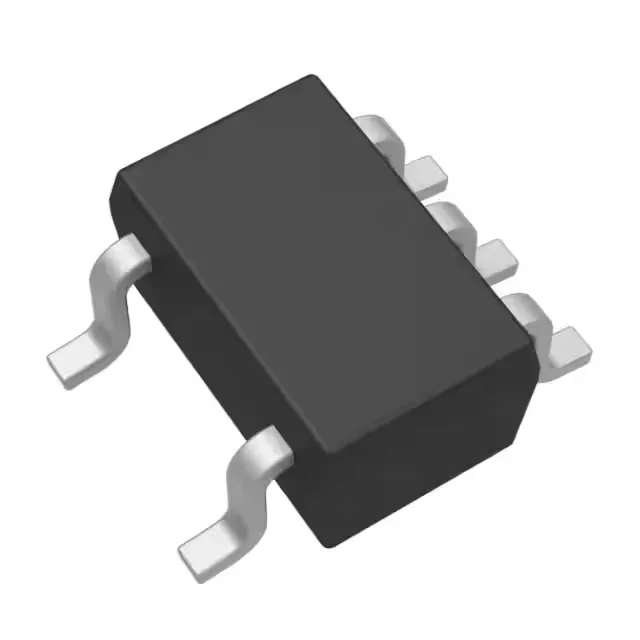
The supply range from 1.65V to 5.5V means this gate can operate on a 1.8V, 2.5V, 3.3V, or 5V rail without a separate level translator. In a mixed-voltage design — say a 3.3V microcontroller talking to a 5V peripheral — the XOR can sit on either rail and still accept the other's logic levels, because the input thresholds scale with VCC: low at 0.7V to 0.8V, high at 1.7V to 2V. That saves a BOM line and a board trace.
32 mA output drive — enough for a LED or optocoupler
Symmetric 32 mA source and sink capability is unusually high for a single-gate logic device. It can directly drive a low-current LED or the input of an optocoupler without an external transistor buffer. The quiescent current is a maximum of 10 µA, so the part does not penalise a power-sensitive rail when idle.
5.7 ns propagation delay — verify timing margin
The maximum propagation delay is 5.7 ns at 5V with a 50 pF load. If the XOR sits in a high-speed clock or data path, check the timing budget against the system's cycle time — at lower supply voltages the delay will be longer, so the 5.7 ns figure is the best-case corner.