160 MHz clock and 4.5 ns propagation delay — timing budget reality
Rated for a clock frequency of 160 MHz, this flip-flop can keep up with fast serial data streams or high-speed counter chains. The 4.5 ns propagation delay at 5 V and 50 pF load sets the floor for setup-and-hold calculations: at 160 MHz the clock period is 6.25 ns, leaving only about 1.75 ns of slack after the prop delay and output transition — so PCB trace lengths and load capacitance need tight control. At lower supply voltages (e.g. 1.8 V) the delay increases, so budget accordingly if you run near the frequency ceiling at the low end of the supply range.
Quiescent current is just 10 µA, so it won't strain a battery-powered rail when idle.
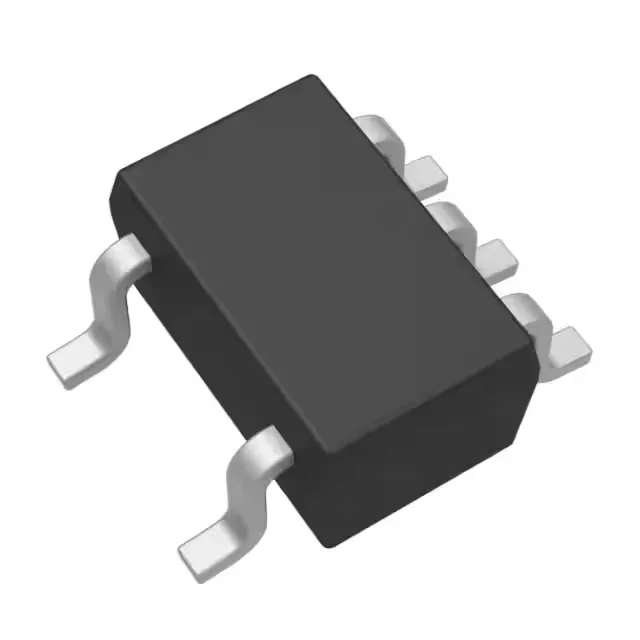
This part can sit in an engine bay ECU, an outdoor base station, or a factory-floor sensor hub without needing a separate high-temp variant. The SC-70-5 package is small enough for space-constrained designs but still hand-solderable for prototyping.
ROHS3 compliant, which covers the latest EU exemption updates. The base product number is 74LVC1G80, and the DCKT suffix specifies the SC-70-5 tape-and-reel variant.