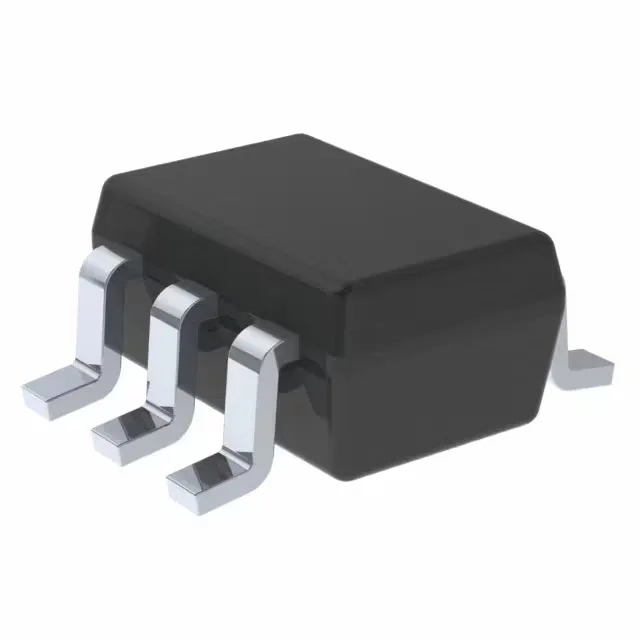
Texas Instruments SN74LVC1G3157DCK3 — Analog & Data Acquisition

SN74LVC1G3157DCK3 Texas Instruments SPDT Analog Switch

MPNSN74LVC1G3157DCK3
Active

Texas Instruments 74LVC1G3157, SPDT analog switch, 340 MHz bandwidth, 15 Ohm on-resistance, 1.65 V to 5.5 V supply, SC-70-6 package, -40°C to 125°C.

$0.4700Ref. price · indicative, final on quote
Independent supplier — new & surplus stockAuthenticity-screened · ESD-safe packingListing updated Jul 2026

Specifications

SN74LVC1G3157DCK3 specifications
ParameterValue
MountingSurface Mount
Voltage - supply, single (V+)1.65V ~ 5.5V
Current - leakage (IS(off))1µA
Operating temperature-40°C~125°C(TA)
-3db bandwidth340MHz
PackageTape & Reel (TR); Cut Tape (CT)
Crosstalk-54dB @ 10MHz
Case6-TSSOP, SC-88, SOT-363
Switch circuitSPDT
Charge injection7pC
Number of circuits1
On-State resistance15Ohm
Switch time (Ton, toff)6ns, 4ns
Multiplexer (Demultiplexer circuit)2:1
Channel capacitance (CS(off), CD(off))5.2pF
Channel-to-Channel matching (ΔRon)200mOhm

Product details

340 MHz SPDT switch for signal routing

The Texas Instruments SN74LVC1G3157DCK3 is a single-pole double-throw (SPDT) analog switch in a 6-pin SC-70-6 package, designed for routing analog or digital signals up to 340 MHz with a 15 Ohm max on-resistance.

Bandwidth and signal integrity

The 340 MHz -3 dB bandwidth supports high-speed analog video, RF switching, and digital data paths up to LVDS rates, while the -54 dB crosstalk at 10 MHz keeps channel isolation clean for multiplexed ADC inputs or audio routing. Charge injection is rated at 7 pC typical, which matters for sample-and-hold circuits where the injected charge must settle before the next conversion cycle.

Temperature grade and supply flexibility

Frequently asked questions

Is SN74LVC1G3157DCK3 RoHS compliant?

The SC-70-6 package is lead-free and RoHS-compliant per TI's standard green material declaration. No separate RoHS certificate is needed for this order code.

What is the closest pin-compatible alternative to SN74LVC1G3157DCK3?

Verify the -3 dB bandwidth and charge injection against your signal path before substituting.