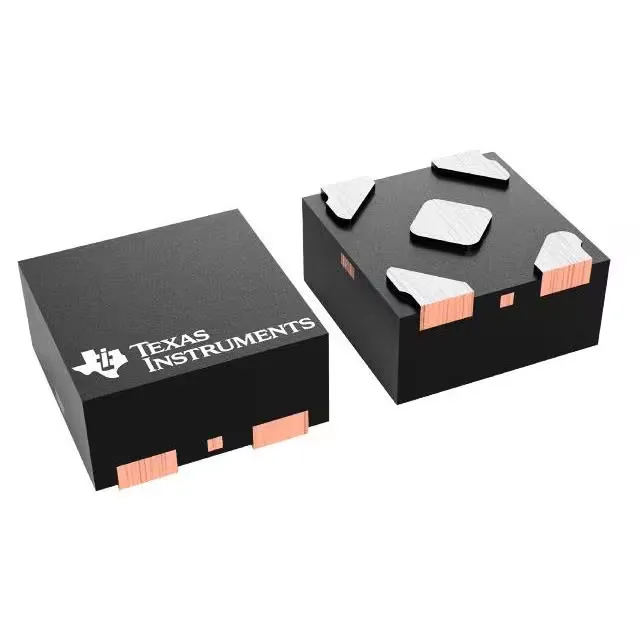
Texas Instruments SN74LVC1G17DPWR — Interface & Transceivers

SN74LVC1G17DPWR Single Schmitt-Trigger Buffer, 1.65V-5.5V

MPNSN74LVC1G17DPWR
Active

Texas Instruments 74LVC series single non-inverting buffer, Schmitt trigger input, push-pull output, 1.65V to 5.5V supply, 32mA output drive, -40°C to 125°C, 4-X2SON (0.8x0.8mm) package.

$0.4000Ref. price · indicative, final on quote
Independent supplier — new & surplus stockAuthenticity-screened · ESD-safe packingListing updated Aug 2026

Specifications

SN74LVC1G17DPWR specifications
ParameterValue
Series74LVC
Input typeSchmitt Trigger
Logic typeBuffer, Non-Inverting
Output typePush-Pull
MountingSurface Mount
Supply voltage1.65V ~ 5.5V
Current - output high, low32mA, 32mA
Operating temperature-40°C~125°C(TA)
PackageTape & Reel (TR); Cut Tape (CT)
Case4-XFDFN Exposed Pad
Number of elements1
Number of bits per element1

Product details

The SN74LVC1G17DPWR: Rated from 1.65 V to 5.5 V, this buffer operates directly from a 1.8 V core rail, a 3.3 V I/O bank, or a 5 V legacy bus. The push-pull output sources and sinks 32 mA at both high and low states, enough to drive a standard CMOS load or a short trace on a densely populated PCB. The Schmitt-trigger hysteresis eliminates chatter on edges from a mechanical switch or a long cable run — a common pain point in panel wiring.

No derating needed across the full range for the 32 mA output current.

Package — board-area saver

Housed in a 4-X2SON with exposed pad (0.8 x 0.8 mm body), the package footprint is one of the smallest available for a single-gate logic device. It fits on the back of a sensor module or inside a space-constrained handheld enclosure.

For volume BOM lines or dual-source qualification, the base product number 74LVC1G17 covers multiple package options — the DPWR suffix is the X2SON variant.

Frequently asked questions

Can SN74LVC1G17DPWR be used at 5V?

Yes, the supply voltage range is 1.65 V to 5.5 V, so it operates directly at 5 V. The Schmitt-trigger input thresholds scale with supply, so at 5 V the switching levels are compatible with 5 V CMOS and TTL logic families.