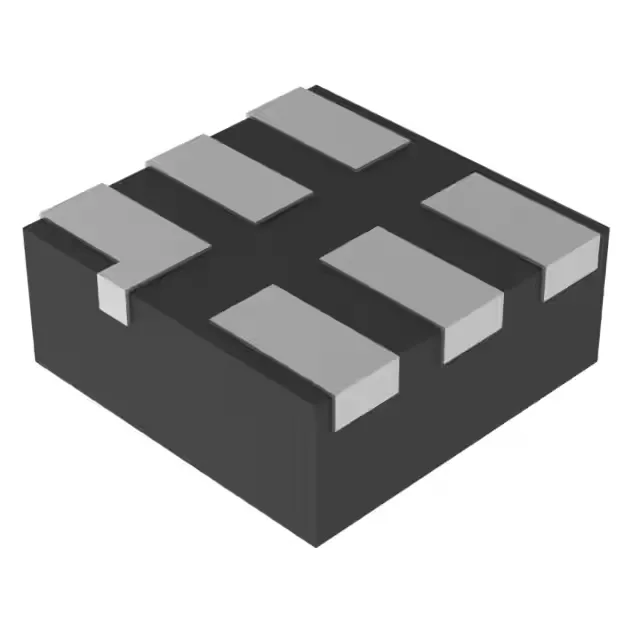
Texas Instruments SN74LVC1G126DSFR — Interface & Transceivers

SN74LVC1G126DSFR Buffer, Non-Inverting, 3-State, 1.65-5.5V

MPNSN74LVC1G126DSFR
Active

Texas Instruments 74LVC series, SN74LVC1G126DSFR, Buffer Non-Inverting, 3-State, 1.65V~5.5V, 32mA output, -40°C~125°C, Surface Mount 6-XFDFN (6-SON 1x1mm).

$0.5200Ref. price · indicative, final on quote
Packaging6-XFDFN
RoHSROHS3 Compliant
Series74LVC
Independent supplier — new & surplus stockAuthenticity-screened · ESD-safe packingListing updated Aug 2026

Specifications

SN74LVC1G126DSFR specifications
ParameterValue
Series74LVC
Logic typeBuffer, Non-Inverting
Output type3-State
MountingSurface Mount
Supply voltage1.65V ~ 5.5V
Current - output high, low32mA, 32mA
Operating temperature-40°C~125°C(TA)
PackageTape & Reel (TR); Cut Tape (CT)
Case6-XFDFN
Number of elements1
Number of bits per element1

Product details

Single buffer with 3-state output for mixed-voltage buses

It accepts a supply range from 1.65 V to 5.5 V, so it can bridge 1.8 V and 3.3 V logic domains without an external level shifter. The output can be placed in high-impedance mode via the output-enable pin, making it suitable for shared data buses or multiplexed signals.

Package and footprint — 6-SON (1x1 mm)

Housed in a 6-SON (1x1 mm) package (supplier device package 6-SON), this is a tiny, leadless package with a 0.5 mm pitch. The 6-XFDFN case requires careful soldering — no room for a probe point, so verify the layout before assembly. The small footprint saves board space on dense PCBs, but the lack of visible leads means visual inspection is impractical; X-ray or automated optical inspection is recommended for production.

The base product number is 74LVC1G126, and the series is 74LVC.

Frequently asked questions

Is SN74LVC1G126DSFR obsolete or active?

SN74LVC1G126DSFR is listed as active.

What is the difference between SN74LVC1G126DSFR and SN74LVC1G125DSFR?

Both are single non-inverting buffers with 3-state outputs in the 74LVC family. The key difference is the output-enable polarity: the '126 has an active-high enable (output enabled when OE is high), while the '125 has an active-low enable (output enabled when OE is low). The pinout differs accordingly — verify the logic sense for your enable signal before substituting.