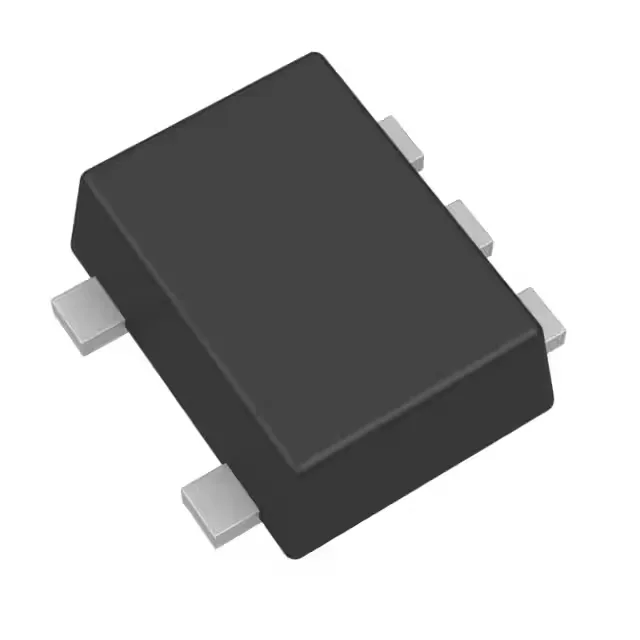
The open-drain output allows wired-OR connections and level translation from any supply voltage within the range to a higher pull-up voltage on the output side. With a 32 mA sink capability on the low side, it can drive LEDs, small relays, or pull down a bus line.
32 mA sink — what the output rating means for your load
The output sinks 32 mA when low, with no high-level drive current because the output is open drain. That sink rating determines the pull-down strength for bus lines, the LED forward current you can switch directly, and the minimum pull-up resistor value at a given supply voltage. At 3.3 V with a 1 kΩ pull-up, the sink current is 3.3 mA — well within the 32 mA ceiling. For a 5 V rail and a 150 Ω load, the current hits 33 mA, which exceeds the rated sink; you need a larger pull-up resistor or an external transistor. The open-drain output also means the high-level voltage is whatever the pull-up rail provides, not the device's VCC — this is how it performs level shifting.
The input is 5.5 V tolerant regardless of VCC, so a 5 V logic signal can drive the input even when the device is powered at 3.3 V. The device is compatible with 3.3 V logic directly — both the input threshold and the output pull-up can be set to 3.3 V.