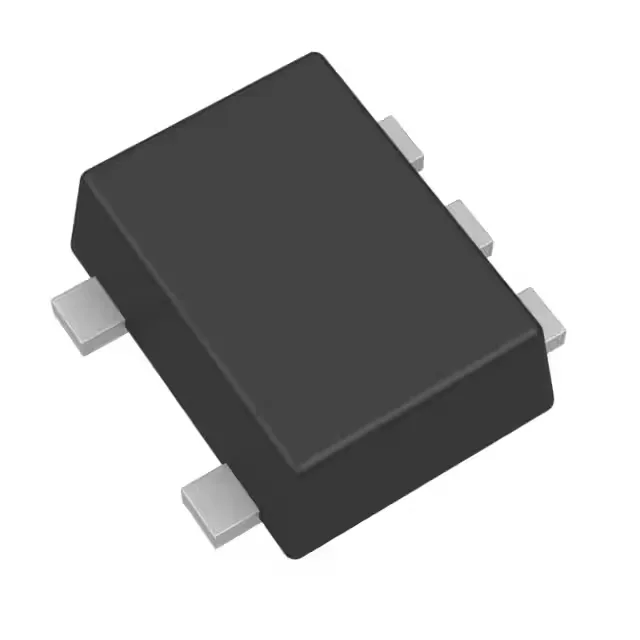
Texas Instruments SN74LVC1G06DRLR — Interface & Transceivers

TI SN74LVC1G06DRLR Buffer Inverter, Open Drain, SOT-553

MPNSN74LVC1G06DRLR
Active

Texas Instruments 74LVC series single inverting buffer, SN74LVC1G06DRLR, open-drain output, 1.65V-5.5V supply, 32mA sink, SOT-553 package, -40°C to 125°C.

$0.3700Ref. price · indicative, final on quote
PackagingSOT-553
RoHSROHS3 Compliant
Series74LVC
Independent supplier — new & surplus stockAuthenticity-screened · ESD-safe packingListing updated Aug 2026

Specifications

SN74LVC1G06DRLR specifications
ParameterValue
Series74LVC
Logic typeBuffer, Inverting
Output typeOpen Drain
MountingSurface Mount
Supply voltage1.65V ~ 5.5V
Current - output high, low-, 32mA
Operating temperature-40°C~125°C
PackageTape & Reel (TR); Cut Tape (CT)
CaseSOT-553
Number of elements1
Number of bits per element1

Product details

Single-gate open-drain buffer for mixed-voltage buses

The SN74LVC1G06DRLR is a single-element inverting buffer with an open-drain output, part of the 74LVC logic family from Texas Instruments. This lets a single device drive a shared bus or interrupt line that must be pulled high to a different rail than the device supply.

Housed in a SOT-553 package (5-pin), the device occupies minimal board area — roughly 1.6 mm × 1.6 mm. The supplier device package is designated SOT-5. Rated for operation across -40°C to 125°C, this part covers industrial temperature extremes — motor-drive cabinets, outdoor telecom enclosures, and under-hood automotive auxiliary circuits all fall within the envelope.

Active lifecycle and compliance status

Confirmed stock and lead-time numbers are provided at quote time.

Frequently asked questions

Is SN74LVC1G06DRLR a direct replacement for SN74LVC2G17QDCKRQ1?

No. The SN74LVC2G17QDCKRQ1 is a dual non-inverting buffer with Schmitt-trigger inputs and push-pull outputs. The SN74LVC1G06DRLR is a single inverting buffer with an open-drain output. They are not pin-compatible and serve different signal-conditioning functions — the former cleans up noisy edges, the latter drives a wired-OR bus or level-shifts an open-drain signal.

What does the open-drain output mean for my design?

The open-drain output can only pull the line low (sink current). A pull-up resistor to the desired high-level voltage is required. This allows the output high voltage to be independent of the device supply — for example, a 3.3 V-powered device can drive a 5 V bus by pulling up to 5 V through the resistor. The sink capability is 32 mA, which determines the minimum pull-up resistance.