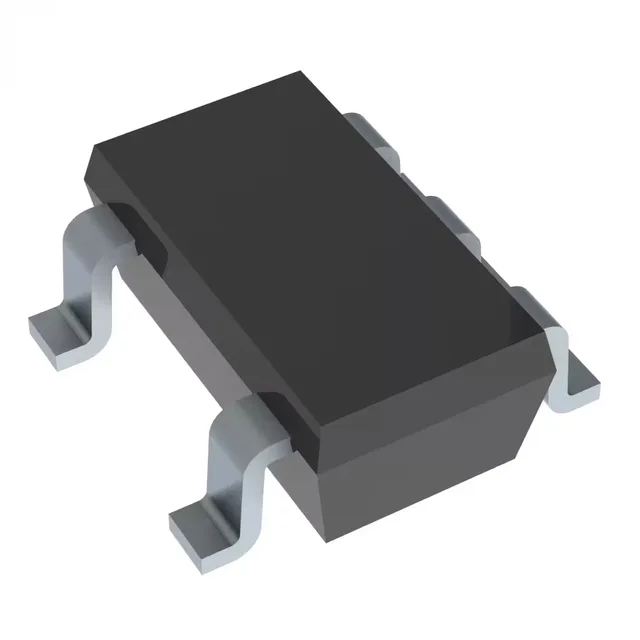
Texas Instruments SN74LVC1G06DBVR — Interface & Transceivers

SN74LVC1G06DBVR Buffer, Inverting Open Drain, SOT-23-5

MPNSN74LVC1G06DBVR
Active

Texas Instruments 74LVC series SN74LVC1G06DBVR single buffer, inverting, open-drain output, 1.65V–5.5V supply, 32mA sink, SOT-23-5 package.

$0.4000Ref. price · indicative, final on quote
PackagingSC-74A, SOT-753
RoHSROHS3 Compliant
Series74LVC
Independent supplier — new & surplus stockAuthenticity-screened · ESD-safe packingListing updated Aug 2026

Specifications

SN74LVC1G06DBVR specifications
ParameterValue
Series74LVC
Logic typeBuffer, Inverting
Output typeOpen Drain
MountingSurface Mount
Supply voltage1.65V ~ 5.5V
Current - output high, low-, 32mA
Operating temperature-40°C~125°C
PackageTape & Reel (TR); Cut Tape (CT)
CaseSC-74A, SOT-753
Number of elements1
Number of bits per element1

Product details

Single inverting buffer with open-drain output

The SN74LVC1G06DBVR is a single inverting buffer from the 74LVC family, with an open-drain output that sinks up to 32 mA. The open-drain topology means the output pulls low actively but relies on an external pull-up resistor to drive the high level — useful for wired-OR connections or level translation to a higher voltage rail than the supply. Operating temperature range is -40°C to 125°C, suitable for industrial and automotive ambient conditions.

SOT-23-5 footprint and ordering code

Housed in a SOT-23-5 (SC-74A) package, the DBVR suffix identifies the tape-and-reel and cut-tape reel packaging options. The 5-pin footprint shares the same 0.95 mm pitch and 2.90 mm body width as other SOT-23-5 logic devices, so a single PCB land pattern serves multiple 74LVC single-gate parts.

Frequently asked questions

What is the closest functional alternative to SN74LVC1G06DBVR?

The SN74LVC1G125YZPR is a single buffer in the same 74LVC family and SOT-23-5 footprint, but it uses a 3-state output instead of open drain. The open-drain output of the SN74LVC1G06DBVR allows wired-OR connections and level translation to voltages above VCC, which the 3-state output cannot do without external circuitry.