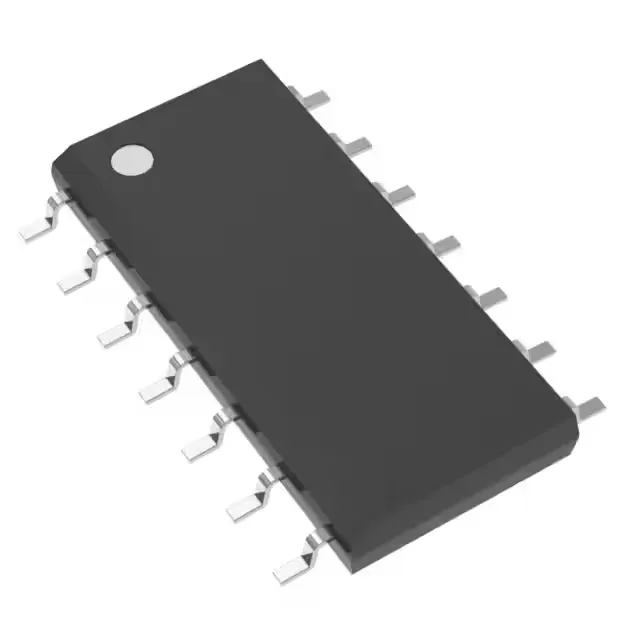
Texas Instruments SN74LVC14ADRG3 — Logic ICs

SN74LVC14ADRG3 Schmitt-trigger inverter, 1.65V–3.6V

MPNSN74LVC14ADRG3
End of Life

Texas Instruments 74LVC series hex Schmitt-trigger inverter, SOIC-14, 1.65V–3.6V supply, 24mA output drive, 6.2ns propagation delay @ 3.3V, –40°C to 125°C, active lifecycle.

$0.56Ref. price · indicative, final on quote
Packaging14-SOIC (0.154", 3.90mm Width)
StockContact for availability
MOQ1 pcs
  • 100% new & originalTraceable channels only — no refurbs, no pulls, no remarked parts.
  • Date & lot codes on quoteStated per line before you commit; label photos on request.
  • MSL-compliant ESD packingMoisture-sealed bags with indicator cards; reels photo-verified.
  • PayPal buyer protectionPay by T/T, PayPal or Payoneer — card payments covered end to end.

Specifications

SN74LVC14ADRG3 Technical Specifications
ParameterValue
Series74LVC
Logic typeInverter
Mounting typeSurface Mount
Voltage1.65V ~ 3.6V
Current - quiescent1 µA
Current - output high, low24mA, 24mA
Number of inputs1
Operating temperature-40°C ~ 125°C
PackageTape & Reel (TR); Cut Tape (CT)
FeaturesSchmitt Trigger
Case14-SOIC (0.154\", 3.90mm Width)
Number of circuits6
Input logic level - low0.15V ~ 0.8V
Input logic level - high1.3V ~ 2V
Max propagation delay @ v, max CL6.2ns @ 3.3V, 50pF

Product details

Six Schmitt-trigger inverters for noise-immune signal conditioning

The Texas Instruments SN74LVC14ADRG3 packs six independent Schmitt-trigger inverters in a 14-SOIC package. Each channel inverts a single input with hysteresis on the switching thresholds — the low-level threshold sits between 0.15 V and 0.8 V, the high-level between 1.3 V and 2 V, giving you clean edges even with slow or noisy inputs. Outputs source and sink 24 mA each, enough to drive a few fan-out loads or a short PCB trace directly.

6.2 ns propagation delay — timing budget at 3.3 V

Max propagation delay is 6.2 ns at 3.3 V with a 50 pF load. At 1.8 V the delay stretches, but the datasheet doesn't quote a number there — plan extra margin if running near the low end of the supply range. For a 50 MHz clock-recovery or data-conditioning path, 6 ns is comfortable; above 100 MHz you'll want the 74LVC1G or a dedicated clock buffer. Quiescent current maxes out at 1 µA, so the part won't leak into your standby budget.

Active production — no LTB concern

TI lists the SN74LVC14ADRG3 as Active (current product). ROHS3 compliant.

Frequently asked questions

Is SN74LVC14ADRG3 compatible with 5V logic?

The inputs are not 5 V tolerant. Driving this part from a 5 V output without level translation will exceed the absolute maximum ratings and damage the device.

What is the difference between SN74LVC14A and SN74LVC14?

The 'A' suffix indicates an improved second-generation design with tighter propagation delay and lower quiescent current compared to the original SN74LVC14. Both are Schmitt-trigger hex inverters and are pin-compatible.

Can SN74LVC14ADRG3 operate at 3.3V?

The 6.2 ns propagation delay spec is measured at 3.3 V with a 50 pF load, so performance at this voltage is well-characterised.